Shining a Light on the Center’s Rich History of Volunteers
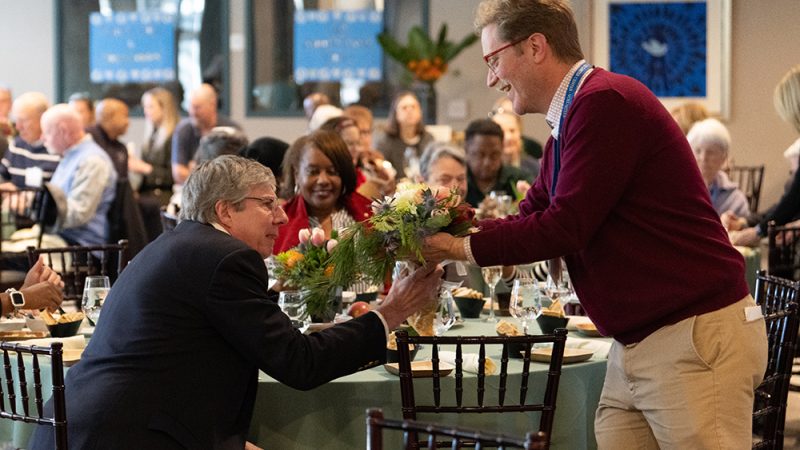
Duncan Ross-Kinzie, director of the Center’s Volunteer and Art Services, hands flowers to Jim Johnson, a volunteer of the month, at an annual celebration of Carter Center volunteers in December 2025.
The roots of volunteerism at The Carter Center run deep. Just look at our founders, former President Jimmy Carter and former First Lady Rosalynn Carter. They spent 40 years working without pay to advance the Center’s mission.
Among the earliest volunteers to join them was President Carter’s “Aunt Sissy,” or Emily Gordy Dolvin. She was his mother Lillian’s youngest sibling, and the force that brought the Center’s still-thriving volunteer program to life.
Today, there are about 100 volunteers poised to help, some of whom have been around for decades.
How the program began
Aunt Sissy, who lived in Roswell, Georgia, was no stranger to volunteering. She made a name for herself in service of charities, youth activities, historic preservation, a hospital, and more.
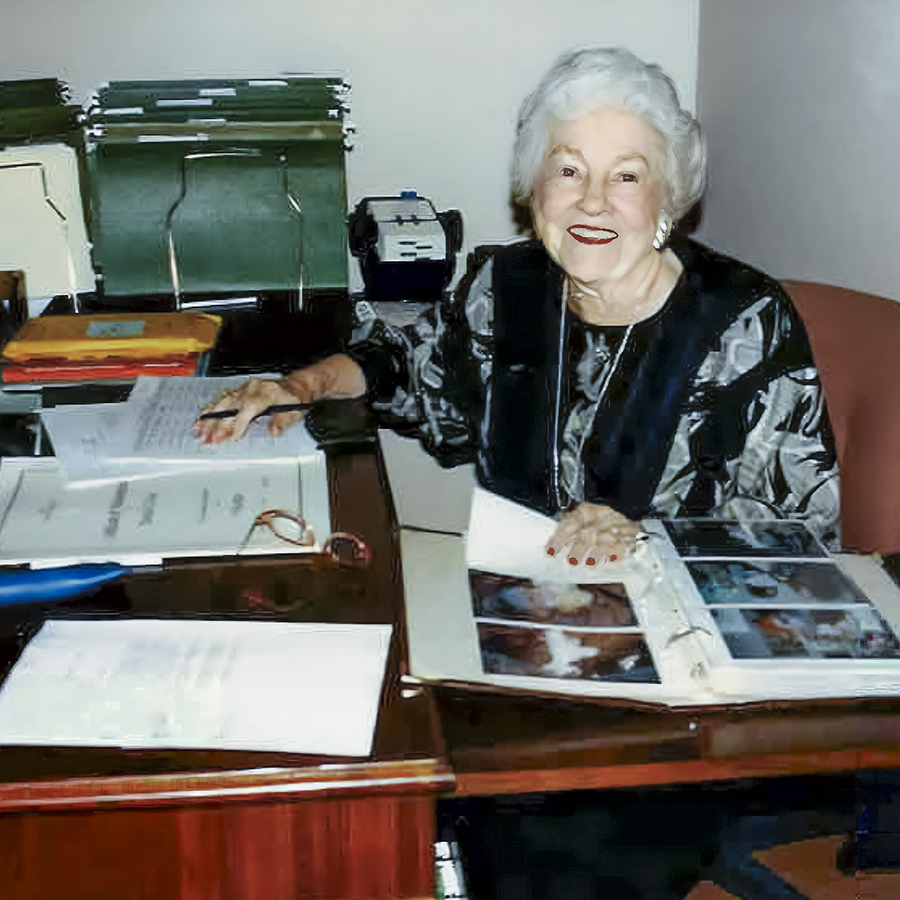
“Her whole life has been volunteering,” said her daughter, Mary Lee Bagwell, in an article published after her mother’s passing at age 94 in December 2006. “She just happened to be related to Jimmy.”
Fortunately for him, she also believed in her nephew and his ideals. She threw herself into supporting his political goals, coordinating volunteers for his gubernatorial campaigns. Then came the “Peanut Brigade,” the grassroots band of Georgia volunteers who hit the ground, across the nation, to campaign during then-Gov. Carter’s 1976 presidential run. Aunt Sissy, widowed in 1974, joined in — not as an official member of the brigade but as a family member, making a name for herself on the frontlines.
Her stump speeches and ability to connect with voters were legendary, and President Carter credited Aunt Sissy for his win in Maine.
“She was living proof that there was absolutely no limit on what a determined and charming Southern woman can do,” he said in 2006 “She has always been an inspiration to me.”
President and Mrs. Carter established The Carter Center in 1982 and wanted, from day one, to make it a hospitable place. Volunteers, they knew, would be the key to welcoming visitors, offering tours, and being a public and helpful face to outsiders. And in Aunt Sissy they had the perfect person to lead the charge.
Answering the call
What began informally became an official volunteer program in 1987, says Jackie Culliton, who was hired in 1994 to work with Aunt Sissy, and then ran the Center’s program from 1996 to 2025.
The earliest volunteers proved essential to the work. They handled mailings, filing, and operated the switchboard. They ran a clipping service to monitor newspapers and journals. They processed tickets for lectures and collected donation checks.
What’s more, they freed up staff members, then much smaller in number, to focus on programmatic work around the world.
The first volunteers were former members of the Peanut Brigade, said Culliton. The pool evolved to include retired teachers, doctors, lawyers, professors, people of all different backgrounds, and students.
“Everyone is there because they admire and appreciate what the Center does and want to contribute,” Culliton said. “There’s a real family feel.”
An inspired loyalty
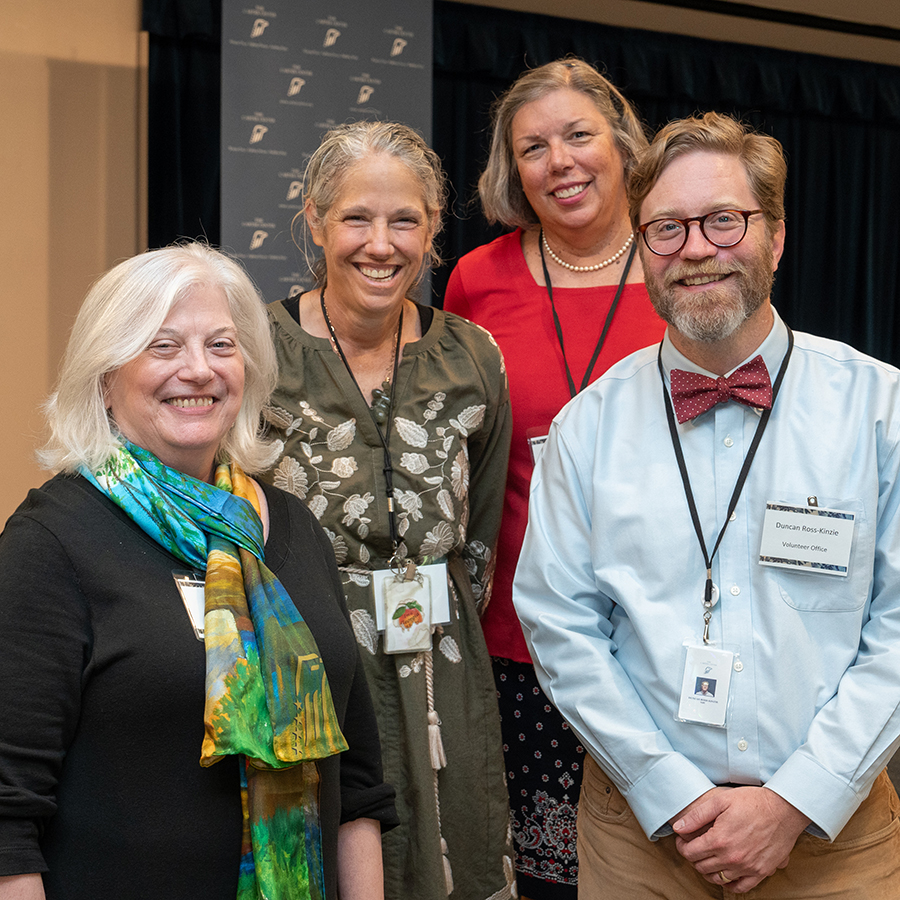
At the helm of the volunteer program today is Duncan Ross-Kinzie, who joined the Center 22 years ago as an intern for Culliton.
“The Carters and the mission inspired this kind of loyalty,” he said.
Current volunteers, ranging from college age to 97, come in weekly, monthly, or a couple times a year. Whether gardening, helping with special projects, stuffing envelopes, leading tours at the Center or The Jimmy Carter Presidential Library and Museum, pitching in at events, or offering a smiling and helpful face, they remain a vital part of the organization’s culture first imagined by the Carters so many years ago.
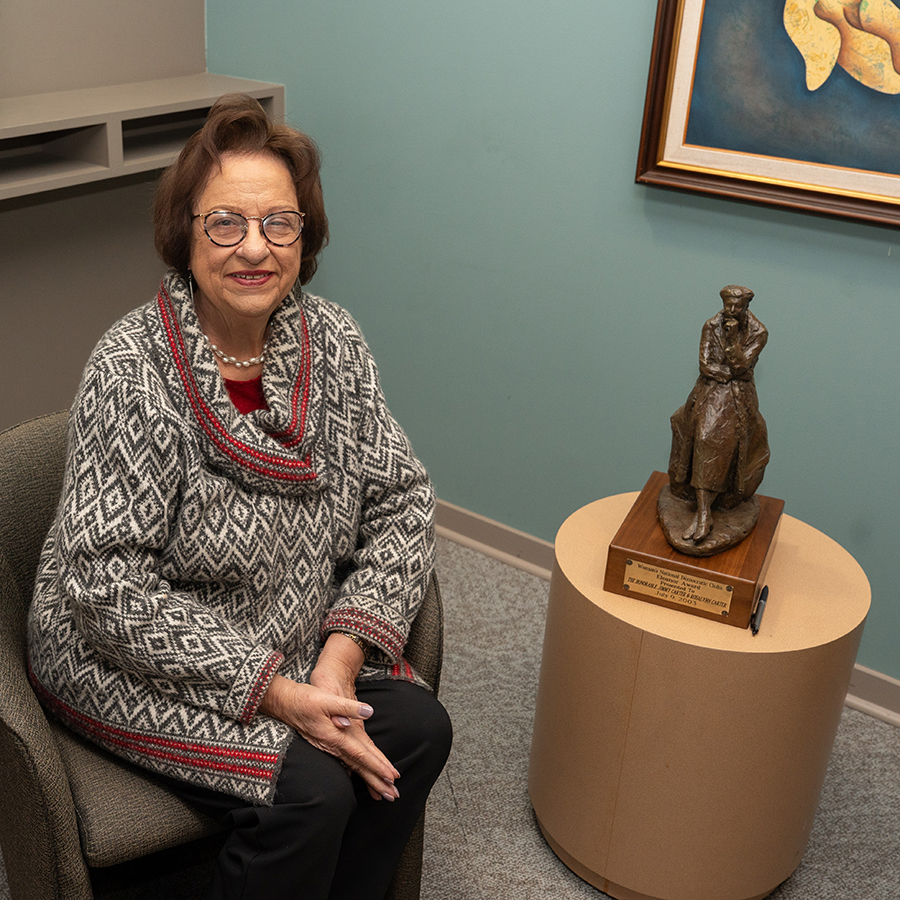
And for longtime volunteers like Ann Levine, who’s been involved for more than 21 years, the opportunity to serve has been an honor.
“The jobs I’ve done are not difficult jobs. Anybody could do these jobs,” she said. “But to feel like you’re a part of such an important organization, even a tiny cog doing your little bit, words can’t express how important this has been to me.”
Global Impact Starts with You
Your support sustains the Carter Center's mission of waging peace, fighting disease, and building hope around the world.