Wrestling with Israel-Palestine Conflict, Inspired by President Carter

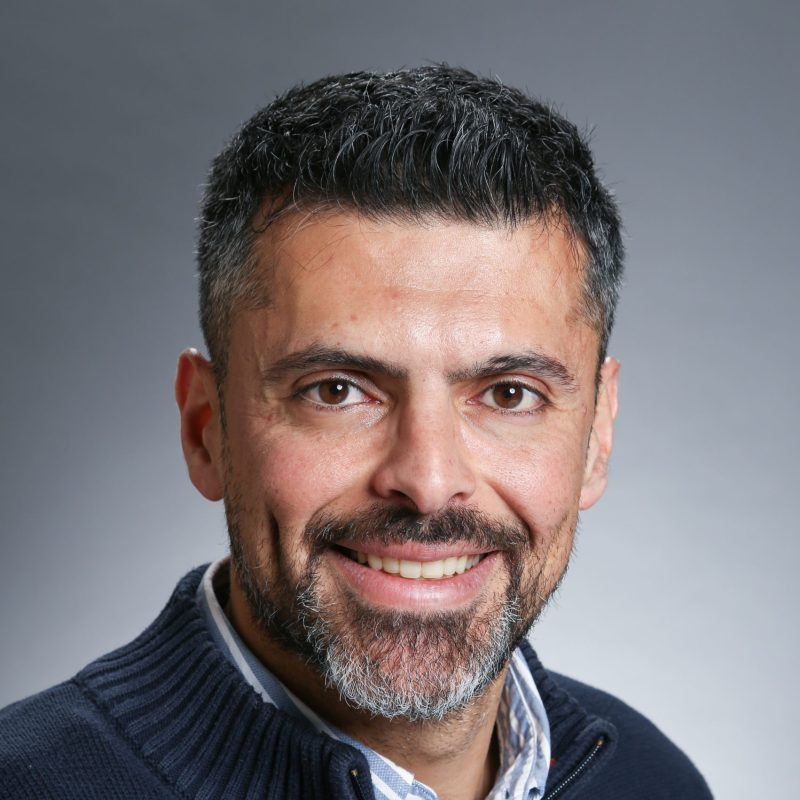
George Zeidan (right) engages in conversation with Jason Carter, chair of the Carter Center Board of Trustees, at the 2024 Carter Center Weekend in San Diego, California.

Spotlight Profile

Some jobs seem predestined. Just look at George Zeidan, the Center’s country representative for Israel-Palestine. A lifelong admirer of President Jimmy Carter, he dreamed of working for The Carter Center years before he came on board.

“President Carter put his morals and principles above all else. He spoke to antagonists, not to validate them but because he knew we can’t solve conflicts with hot tea and hugs,” Zeidan said. “The Carter Center touched issues no one else would touch. That was very inspirational to me.”

Any day can look different for Zeidan, as he strives to build bridges in this deeply divided region. He sits down with human rights activists, diplomats, or politicians. He supports democracy-seeking community groups and focuses on Palestinian self-determination and political legitimacy. He works across generations, carving out extra time to hear from young people. He promotes nonviolence, listens a lot, and drinks plenty of coffee.

Zeidan lives in the Christian Quarter of the Old City of Jerusalem, in the home where his maternal grandparents married and his mother was born. His parents are “a mixed marriage,” two Palestinians with different paperwork — his mother, a Jerusalemite, is a resident of Israel; his father, a West Banker with a Palestinian
passport.

As a result, he grew up living in the occupied West Bank city of Beit Jala, so
his parents could be together. But he traveled with his mother through Israeli
checkpoints to go to school in Jerusalem so she could maintain her residency status and pass it on to him.

The seven-mile journey to school could take hours to complete. Plus, there
were curfews to navigate and tensions that flared between Israeli soldiers and
stone-throwing protesters outside the family’s home. Zeidan recalls peering out
the window with his mother when hostilities erupted, worried and waiting for his father to safely return from work.

He traveled abroad for the first time to attend Chowan University, a private Christian school in Murfreesboro, North Carolina. Later, a Fulbright scholarship sent him to the University of Southern California, where he earned a master’s in public policy with a focus on nonprofit leadership.

Back home, he spent four years with a Danish humanitarian organization doing work in Gaza and the West Bank before he joined the Center. His current role started just before Oct. 7, 2023, when Hamas led a deadly attack in southern Israel and took hostages, unleashing a brutal war in which Israeli attacks killed more than 70,000 people in Gaza.

Zeidan finds his own peace in workouts. He’s run 15 marathons and completed an ultramarathon. He organizes sporting events. He finds comfort in his nieces and nephew.

He’s not naïve. Resolving, not just managing, an age-old conflict demands a long-game approach — and a heavy dose of pragmatism. It requires the recognition of each side’s right to exist, he says, because neither Palestinians nor Israelis are going anywhere.

Given Israel’s dominance, spiraling gun violence in Palestinian communities, deadly attacks by Israeli settlers, and the continued regional war, it’s hard for Zeidan to be optimistic.

“We are in a situation that is becoming increasingly unlivable, especially for Palestinians,” he said. “Both people need to understand that there’s no violent solution to what’s going on. We need to take a different path.”

More on Isreal and Palestine

Read More
Read More
Read More