Peace Programs Photo Gallery
These photographs are available for download free of charge, subject to copyright restrictions noted below.
Copyright and Usage
Any use of these files by media or individuals must be accompanied by the credit information included on each page.
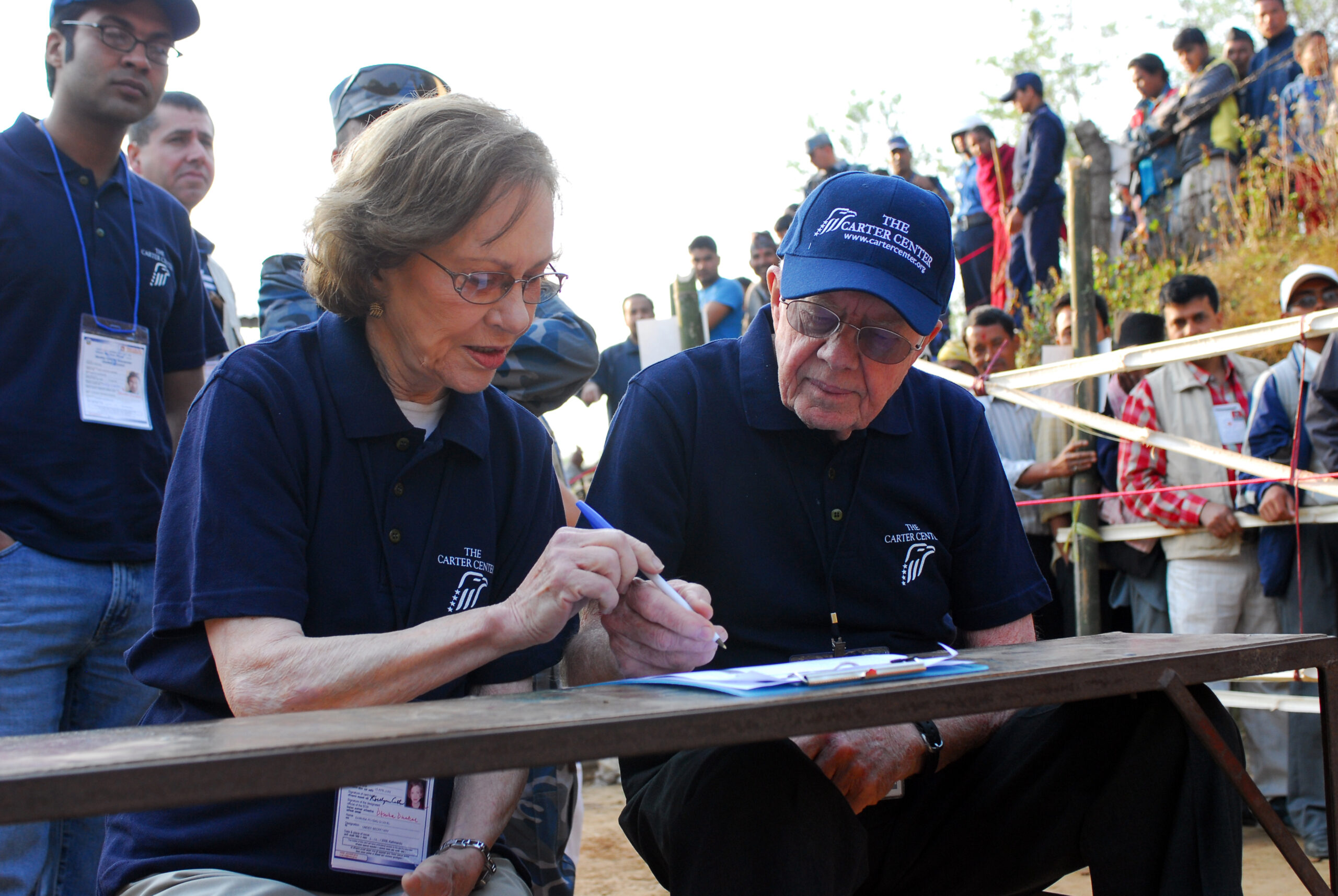
Date: April 10, 2008
Credit: The Carter Center
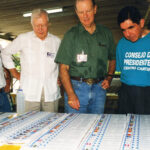
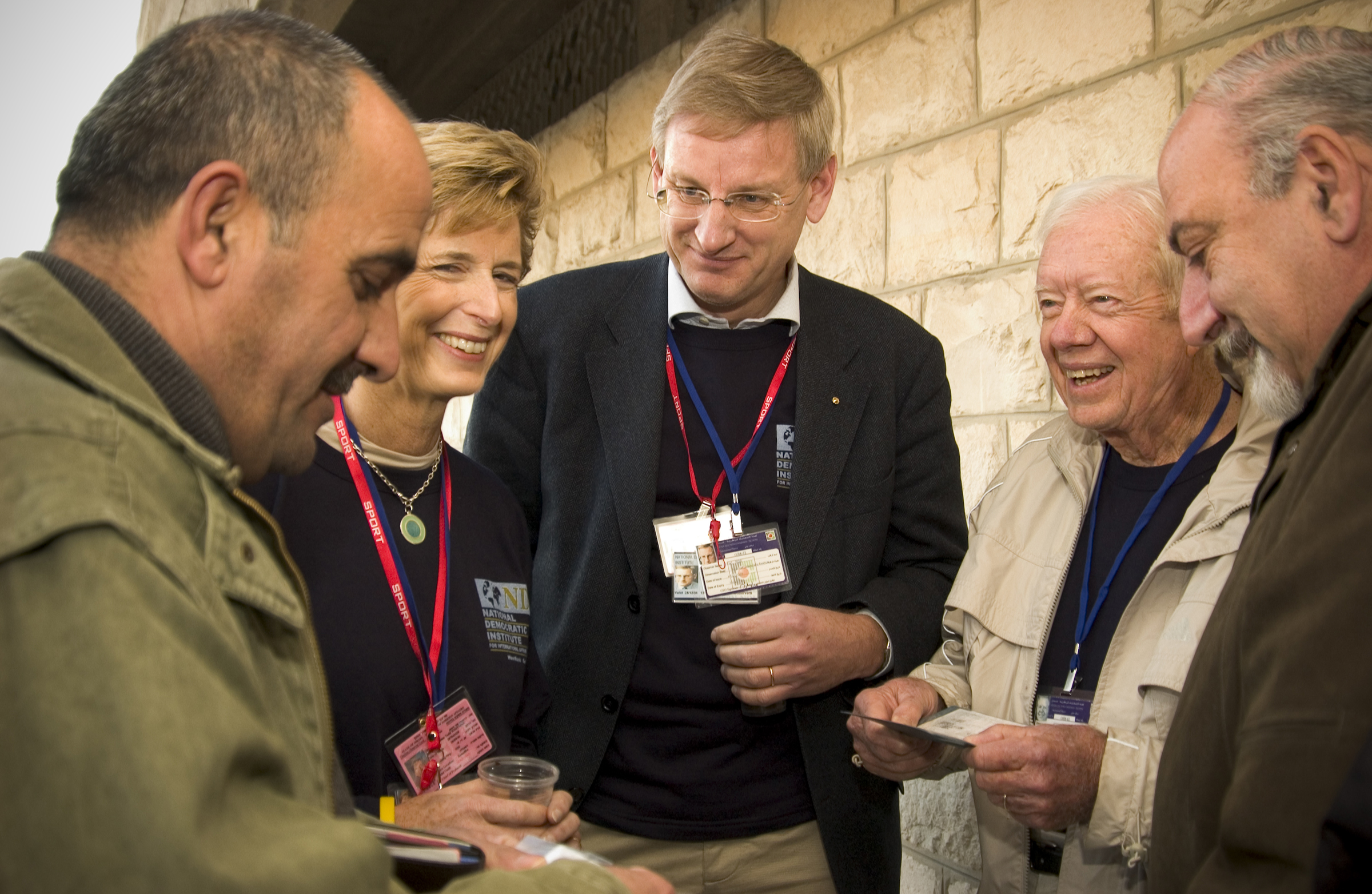
President and Mrs. Carter complete a polling center opening form while waiting for voting to begin in Bhaktapur, Nepal. The Carter Center observed Nepalese voters casting ballots on April 10, 2008, in the first elections this country has held since parliament was restored and the king’s power curtailed in 2006.
Download high-resolution version >
Download high-resolution version >
Date: February 1995
Credit: The Carter Center
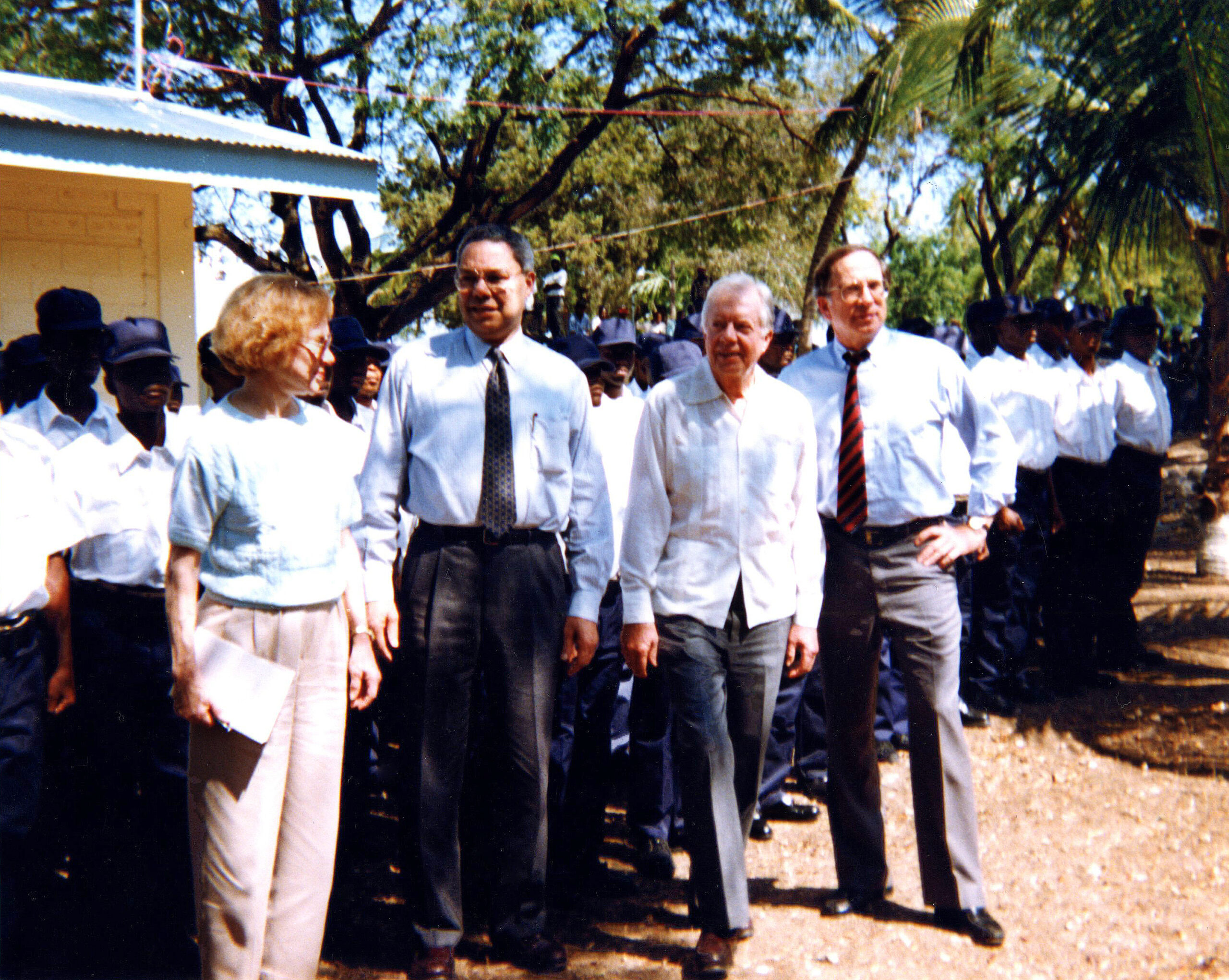
Former First Lady Rosalynn Carter joined former Chairman of the Joint Chiefs of Staff Colin Powell, former U.S. President Jimmy Carter, and then-U.S. Senator Sam Nunn (D-Ga.) on a trip to Haiti in February 1995 to assess progress on preparations for elections. Pres. Carter, Gen. Powell, and Sam Nunn had convinced the country’s military leaders to step down in September 1994.
Download high-resolution version >
Date: June 16, 1994
Credit: The Carter Center
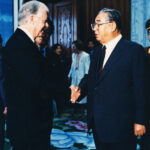
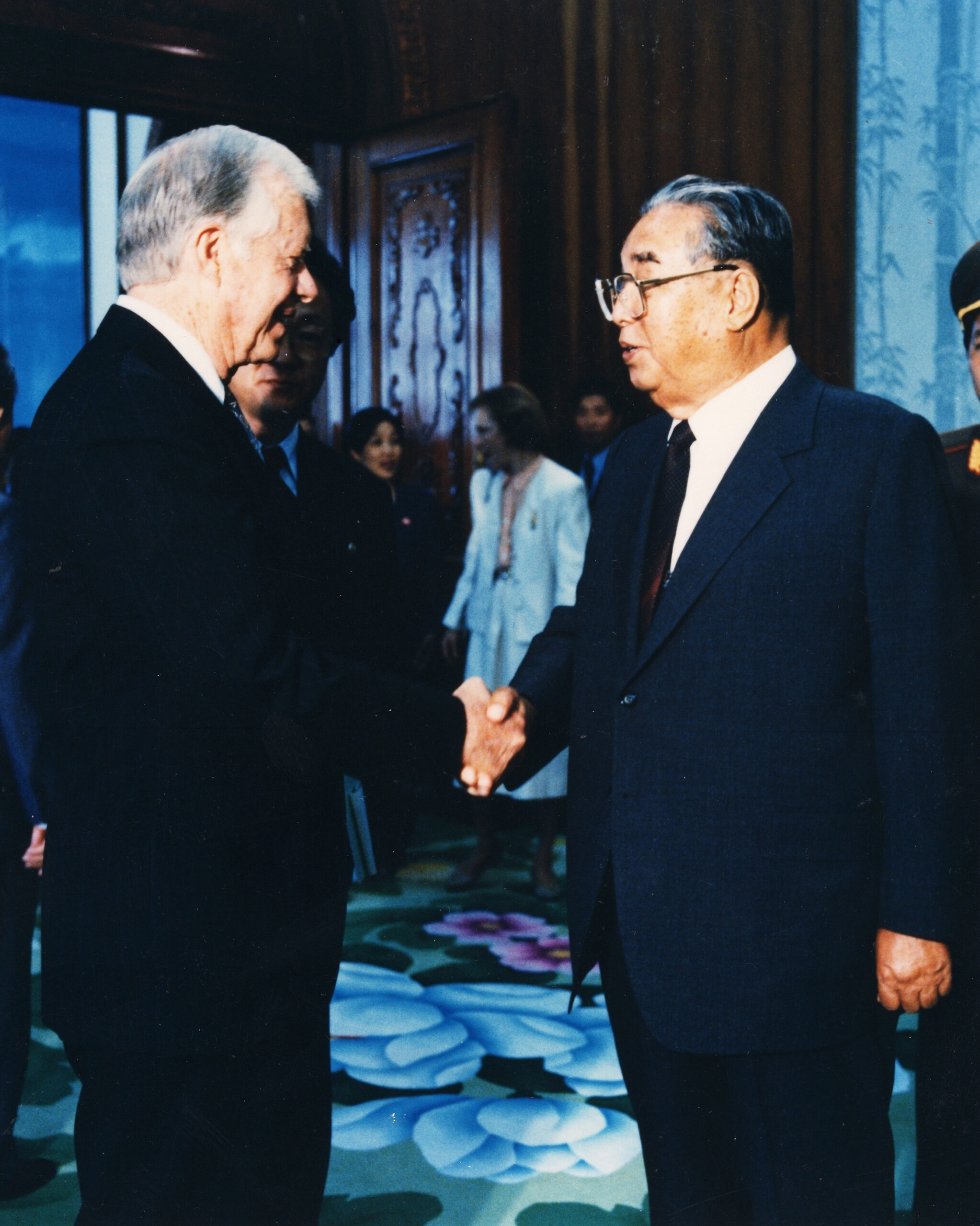
President Carter and North Korea President Kim Il Sung in Pyongyang, North Korea.
In 1994, the United States and North Korea were on the brink of war due to concerns North Korea was trying to build a nuclear weapon. In the absence of diplomatic relations between the two nations, President and Mrs. Carter were sent as private citizens representing The Carter Center to meet with President Kim Il Sung in Pyongyang. A breakthrough was achieved, and North Korea agreed to freeze its nuclear program in exchange for a dialogue with the United States. The trip set a new stage for efforts to strengthen peace on the Korean Peninsula.
Download high-resolution version >
Date: November 1995
Credit: The Carter Center
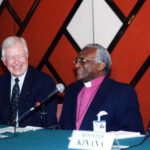
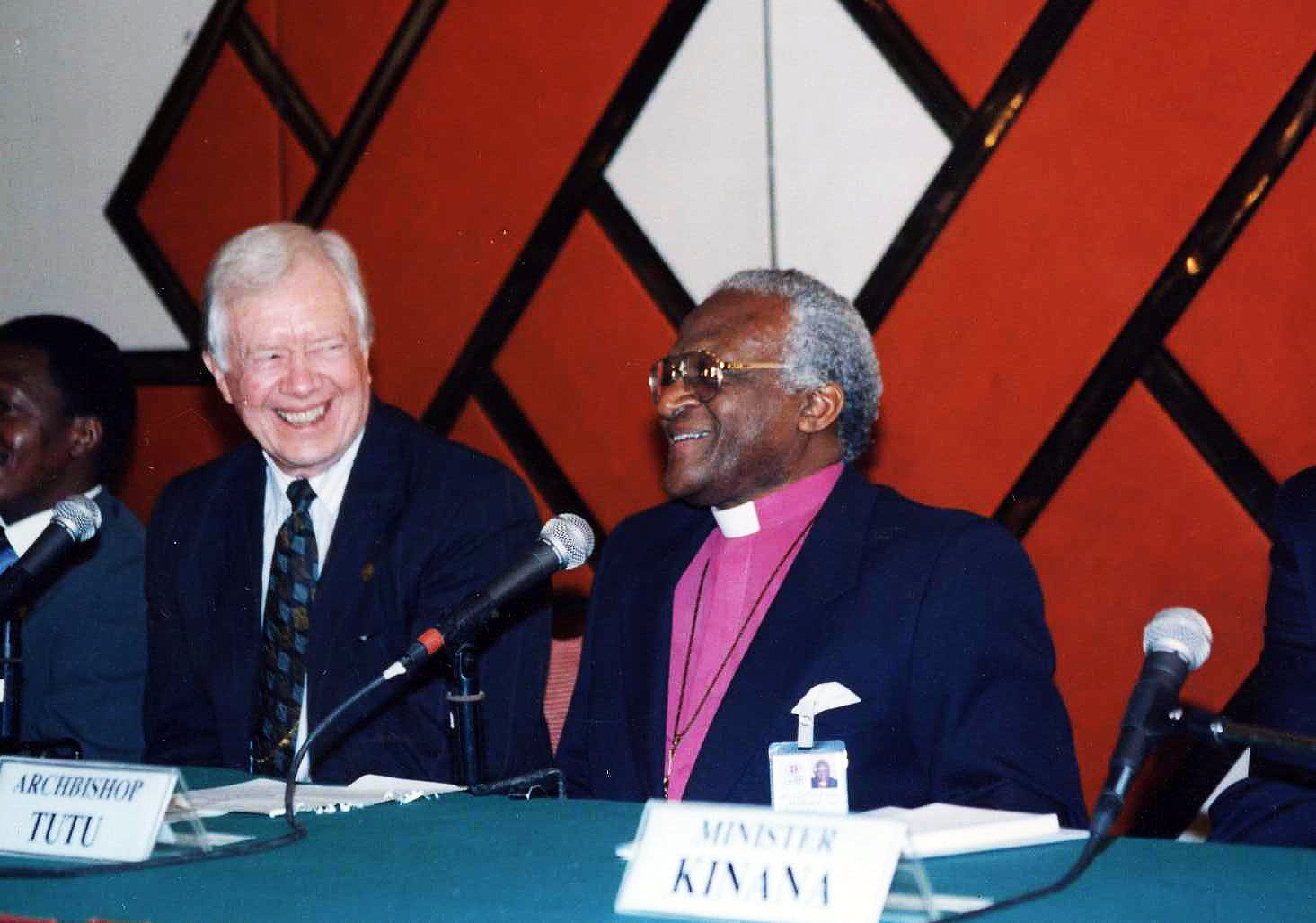
Former U.S. President Jimmy Carter and Archbishop Desmond Tutu of South Africa in Cairo, where The Carter Center brought together an unprecedented group of leaders committed to resolving the crisis in the Great Lakes region of Africa.
Download high-resolution version >
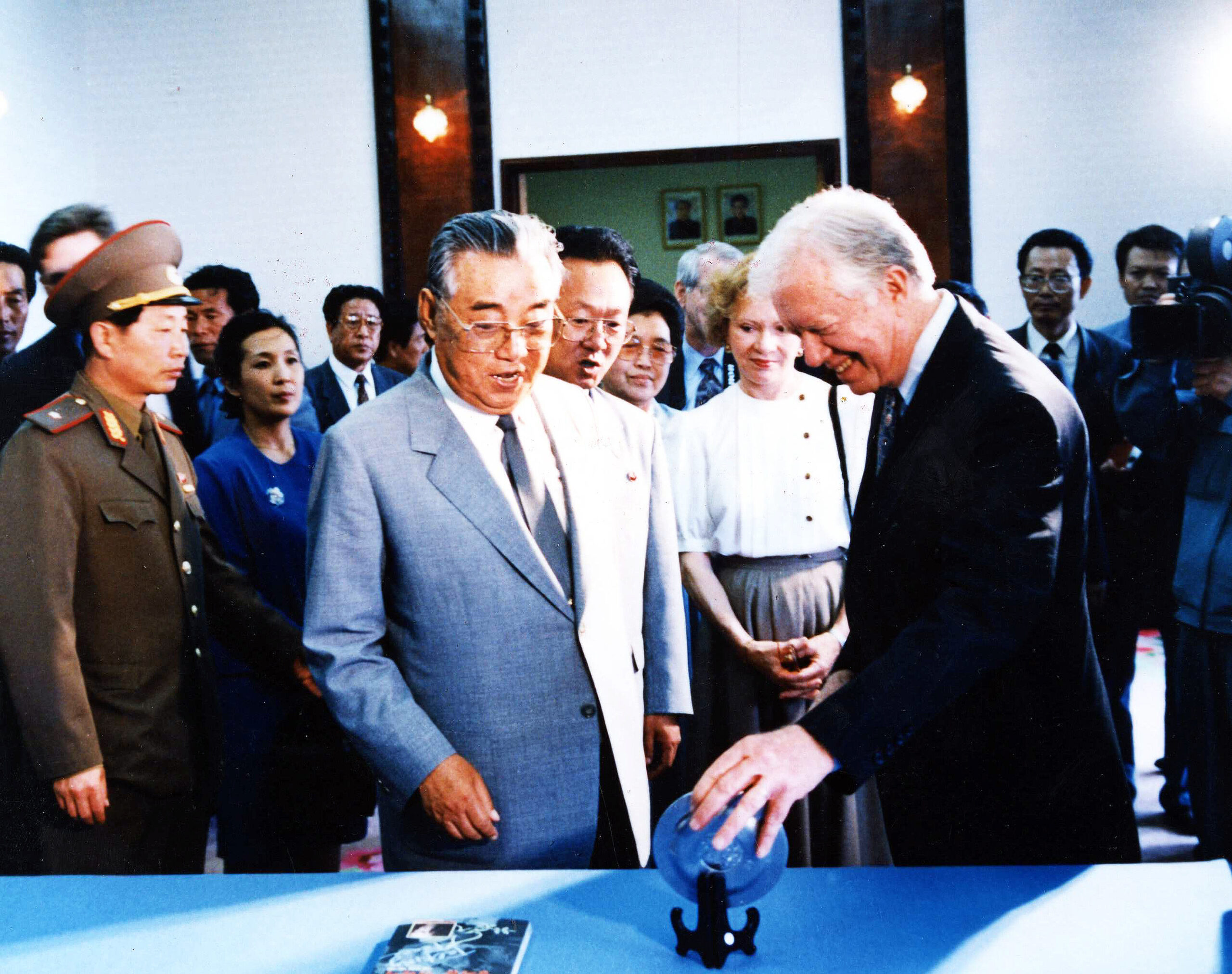
Date: June 16, 1994
Credit: The Carter Center
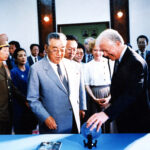
President and Mrs. Carter admire a gift presented by North Korea President Kim Il Sung during their trip to North Korea in June 1994.
In 1994, the United States and North Korea were on the brink of war due to concerns North Korea was trying to build a nuclear weapon. In the absence of diplomatic relations between the two nations, President and Mrs. Carter were sent as private citizens representing The Carter Center to meet with President Kim Il Sung in Pyongyang. A breakthrough was achieved, and North Korea agreed to freeze its nuclear program in exchange for a dialogue with the United States. The trip set a new stage for efforts to strengthen peace on the Korean Peninsula.
Download high-resolution version >
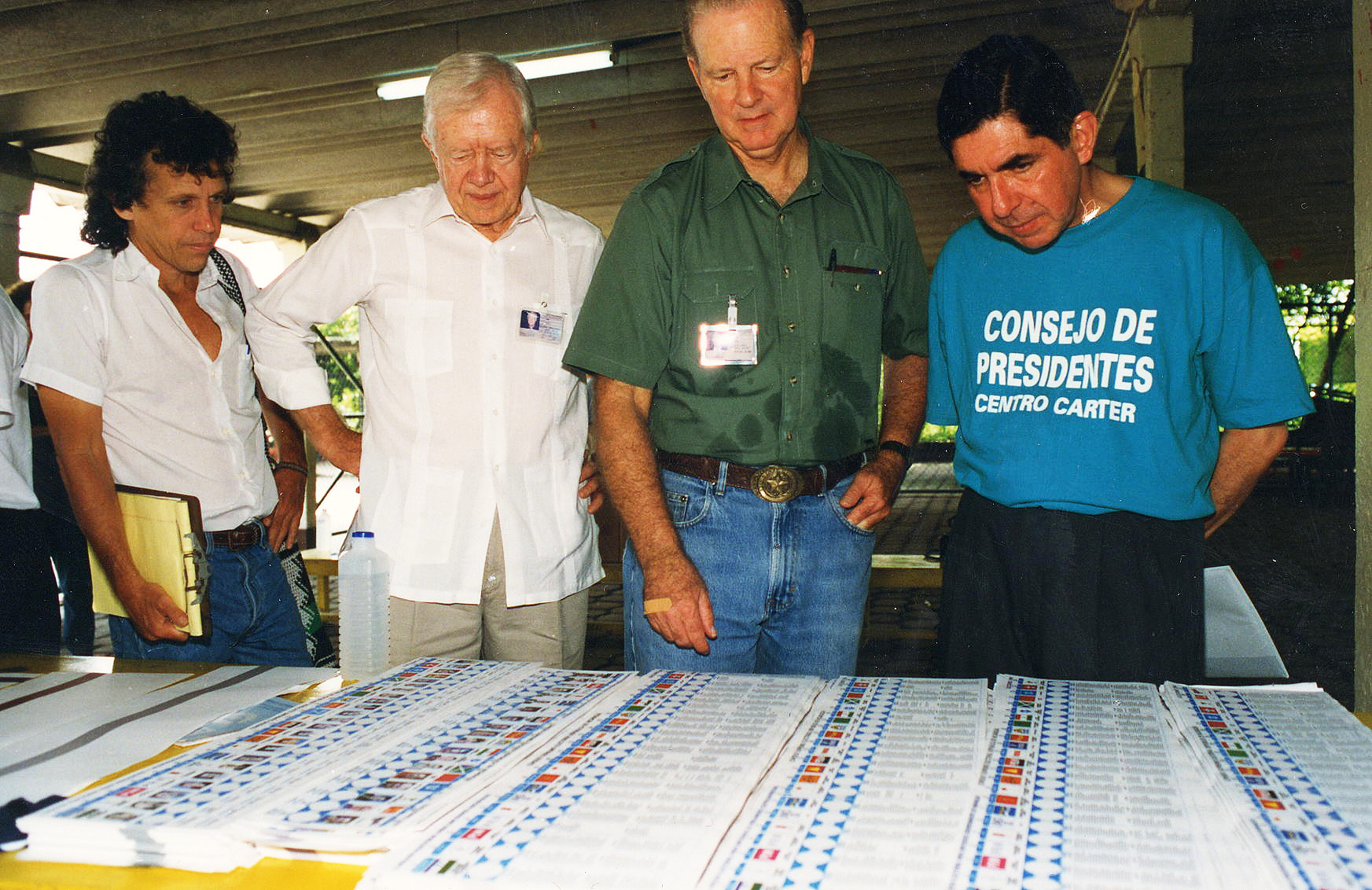
Date: November 1996
Credit: The Carter Center
Former U.S. President Jimmy Carter, former Secretary of State James Baker, and former Cost Rica President Oscar Arias led a Carter Center delegation to monitor the October 1996 national election in Nicaragua.
Download high-resolution version >
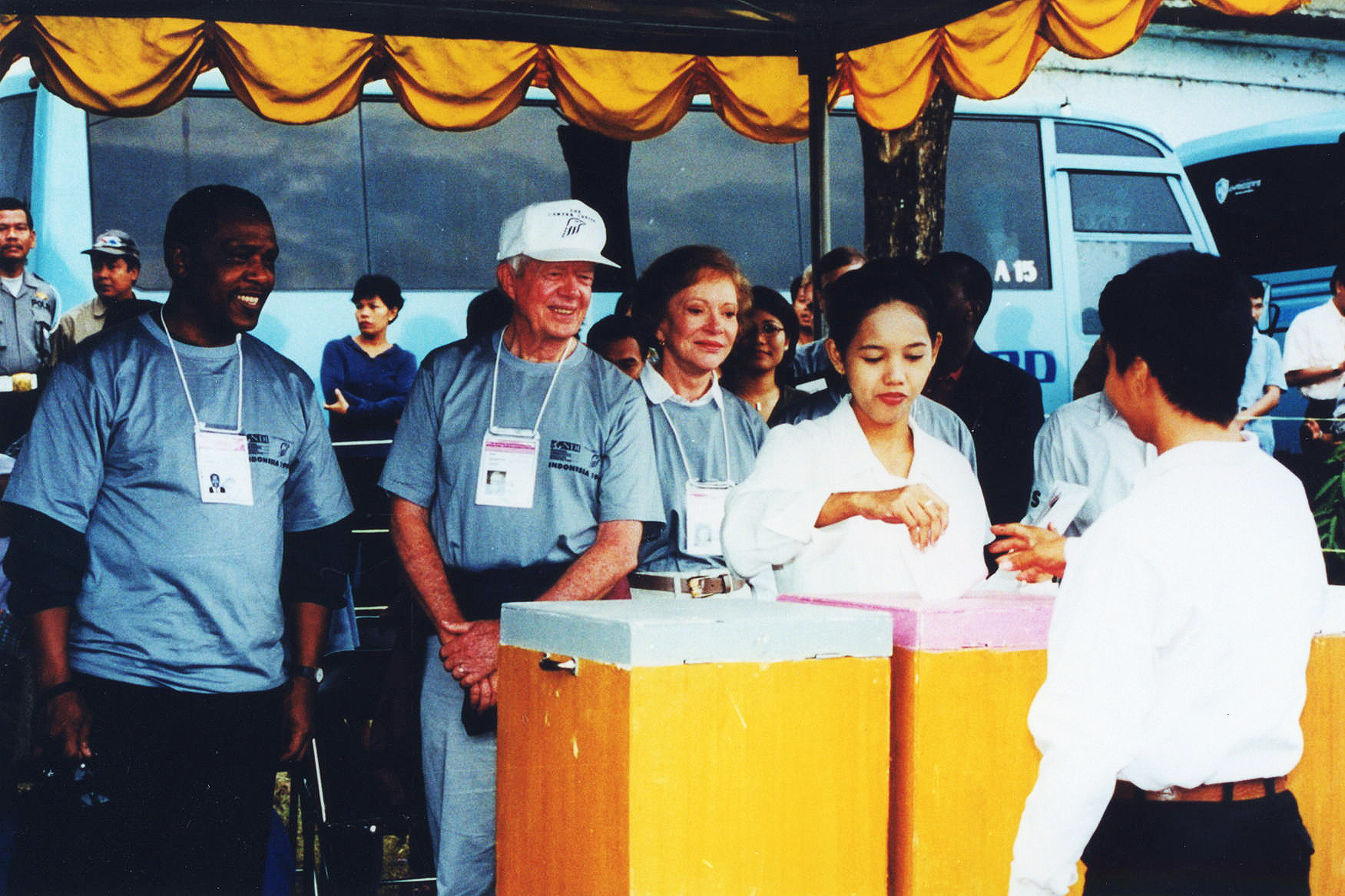
Date: June 7, 1999
Credit: The Carter Center
President and Mrs. Carter observing the Indonesian elections, June 5-9, 1999.
Download high-resolution version >
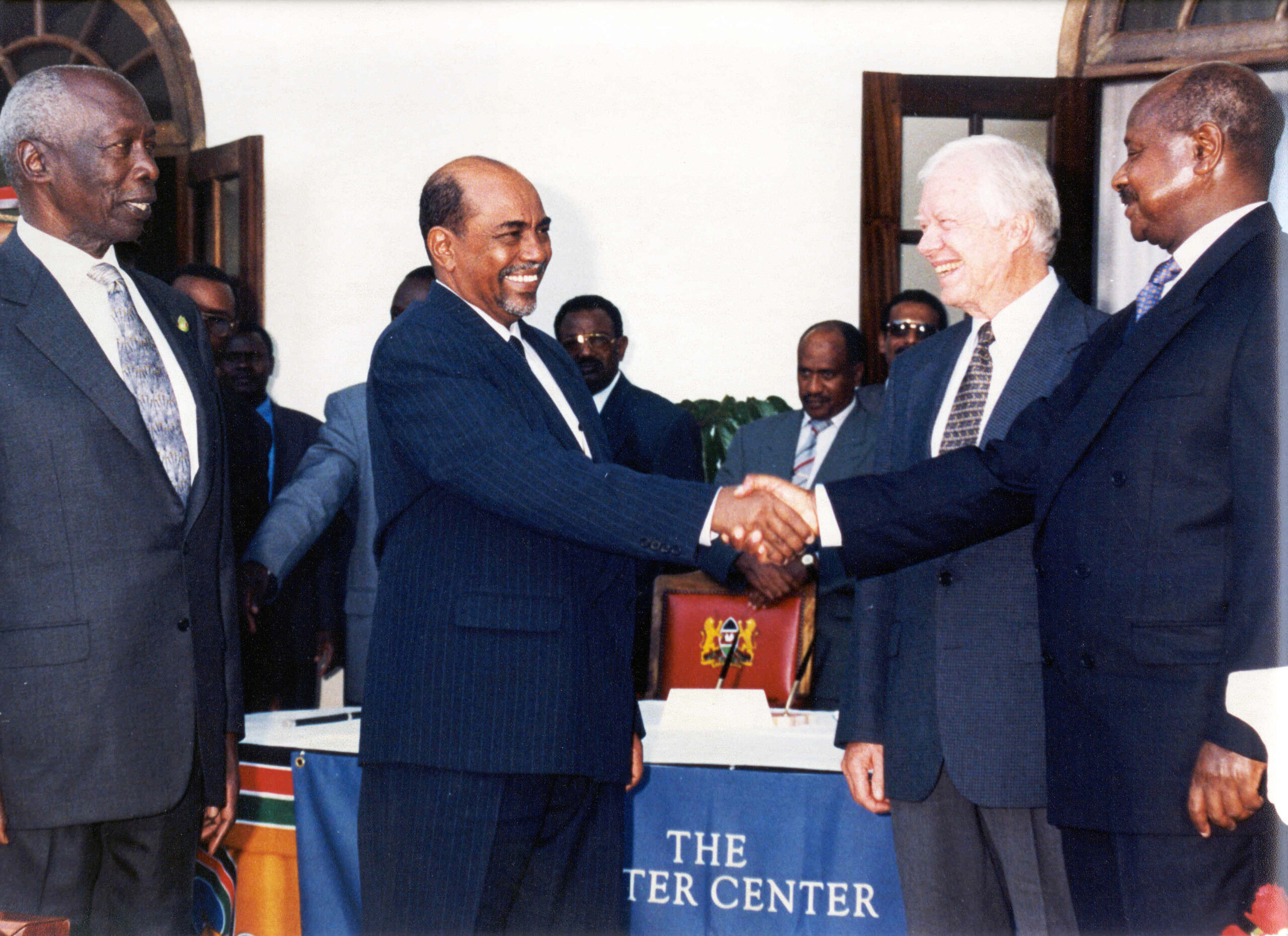
Date: Dec. 8, 1999
Credit: The Carter Center
Former U.S. President Jimmy Carter mediated a peace accord between Sudan and Uganda on Dec. 8, 1999, in which the two countries agreed to take steps to restore diplomatic relations and promote peace in the region. Sudan President Omar Al-Bashir (left) shakes the hand of Uganda President Yoweri Museveni. Kenya President Daniel arap Moi and President Carter witnessed the signing.
Download high-resolution version >
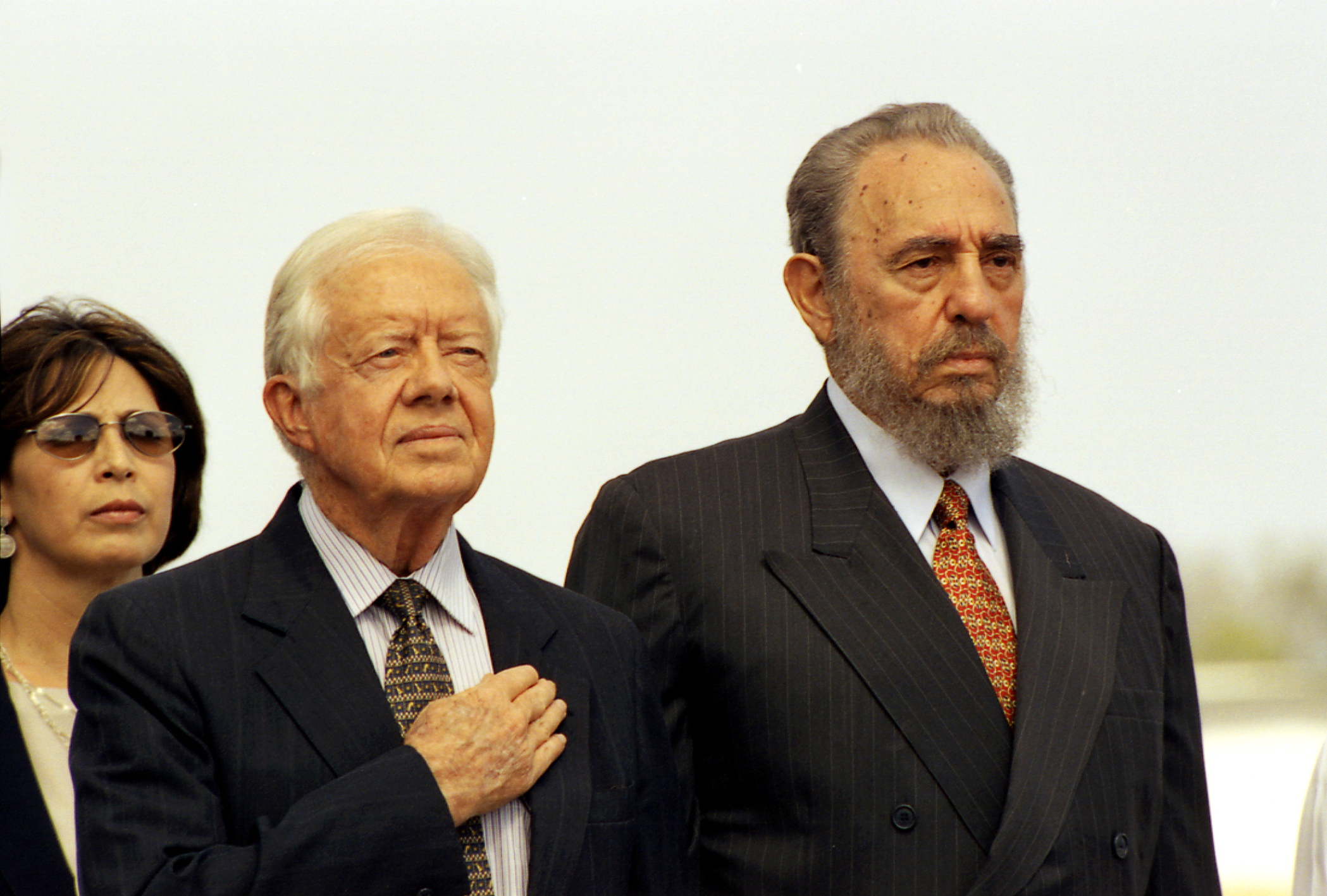
Date: May 12, 2002
Credit: The Carter Center
President Carter listens to the U.S. national anthem during the arrival ceremony of his historic visit to Cuba in May 2002 at the invitation of Fidel Castro.
President Carter, joined by his wife, Rosalynn, became the first former or sitting U.S. president to travel to Cuba since the 1959 Cuban revolution. In an unprecedented live speech broadcast on Cuban television, President Carter called on the United States to end an “ineffective 43-year-old economic embargo” and on President Castro to hold free elections, improve human rights, and allow greater civil liberties.
Download high-resolution version >
Global Impact Starts with You
Your support sustains the Carter Center's mission of waging peace, fighting disease, and building hope around the world.