Guinea

The Carter Center’s work in Guinea focused on two areas: monitoring long-delayed elections in 2010 and partnering with others to teach farmers how to achieve more abundant harvests and thrive moving forward.

Impact

  • Helped ensure democratic process through election observation
  • Empowered Guinean farmers and institutions to stimulate food self-sufficiency

Legacy

Democracy

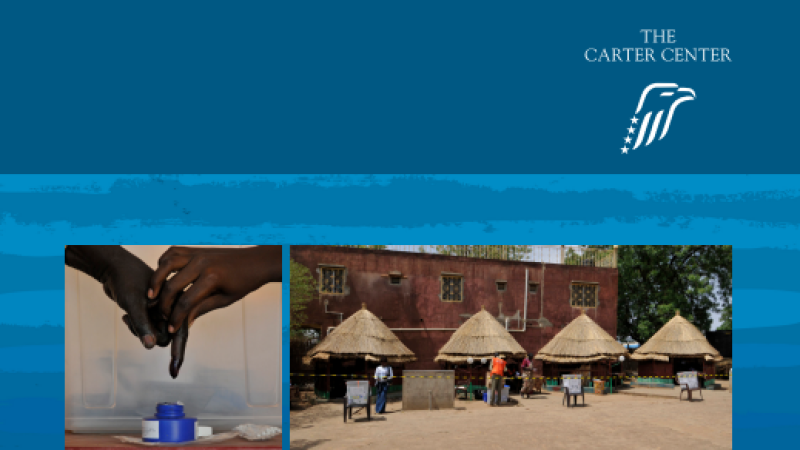
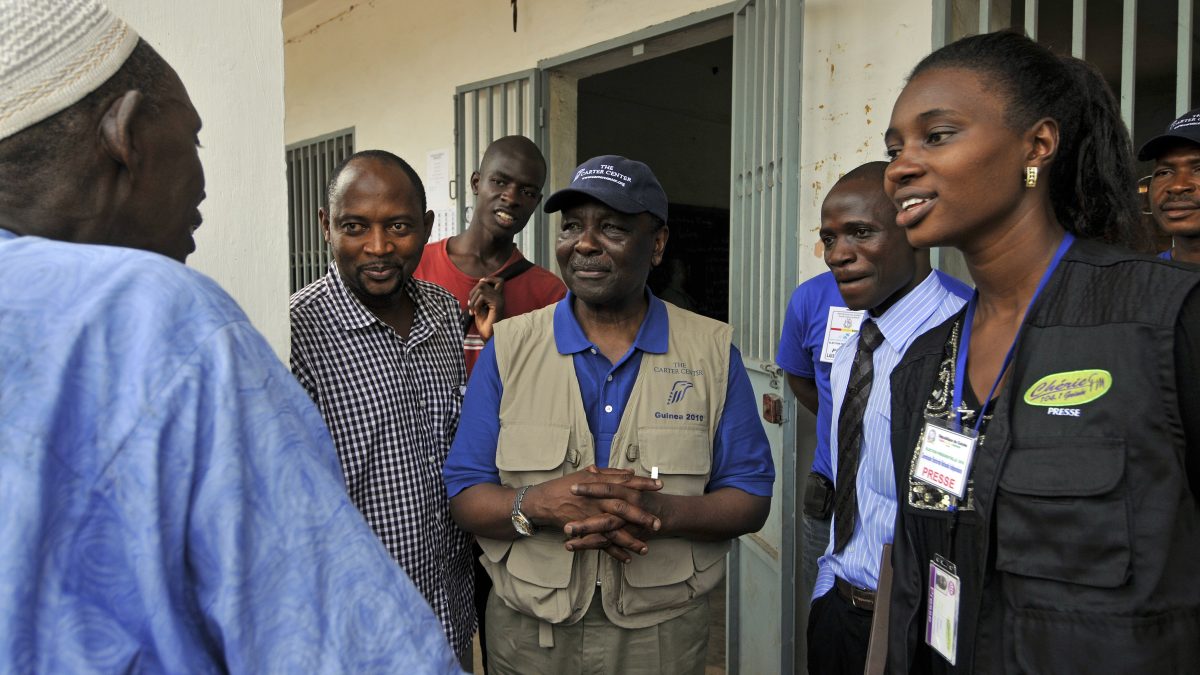
In 2010, Guinea’s electoral commission and government invited The Carter Center to observe long-delayed presidential elections following months of tension and unrest.

We deployed a team of observers to monitor the voting and counting of the first-round election in June and the runoff election in November. Observers remained in the postelection period to monitor results transmission and tabulation processes.

While we offered various recommendations for the future, voting was peaceful and orderly, participation was high, and the processes broadly met the international and regional obligations for genuine democratic elections. 

Link to final election report for Guinea

Legacy

Improving Health

Working hand in hand with the Ministry of Agriculture, The Carter Center, in partnership with the Sasakawa Africa Association, assisted farmers in Guinea with agricultural production starting in 1986. The program was part of a larger partnership led by Nobel Peace Prize winner Norman Borlaug that helped over 8 million small-scale sub-Saharan African farmers in countries where malnutrition is a constant threat.    

Our Work and Methods   

The program provided farmers with credit for fertilizers and enhanced seeds to grow test plots, often yielding 200% to 400% more crops. Participating farmers went on to teach others, creating a ripple effect to stimulate self-sufficiency.  

The program ended in Guinea in 2004. 

Related Content

Read More
Read More
Read More