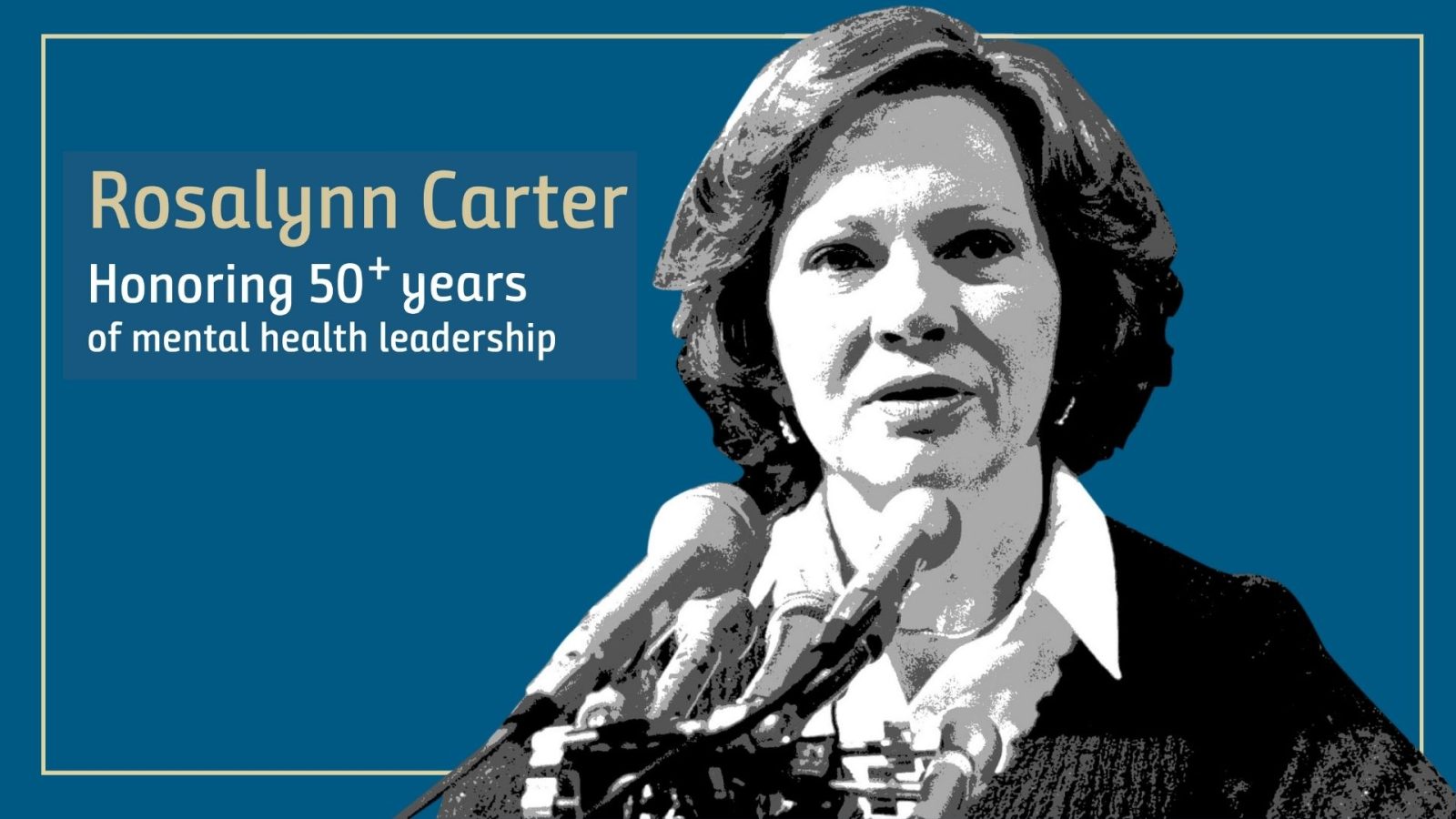
We have to get the word out that mental illnesses can be diagnosed and treated, and almost everyone suffering from mental illness can live meaningful lives in their communities.
Thanks to Rosalynn Carter’s unrelenting activism for over five decades, innumerable people with mental illnesses today have access to mental health care, insurance payments for it, and the freedom to live a life of dignity and self-worth. Her activism began in 1970, when Jimmy Carter was a candidate for governor of Georgia, and continued until her death in 2023. Mrs. Carter’s passion and commitment fueled a mental health movement that will only grow stronger in the years to come.
Timeline
May 1971
Rosalynn Carter served as a member of the Governor’s Commission to Improve Services for Mentally and Emotionally Handicapped Georgians, created by Gov. Jimmy Carter. The final report, “Helping Troubled Georgians Solve Their Problems,” was issued Oct. 29, 1971.
February 1977
Mrs. Carter was named honorary chair of the President’s Commission on Mental Health. In April 1978, the commission delivered its final report to President Carter.
May 1979
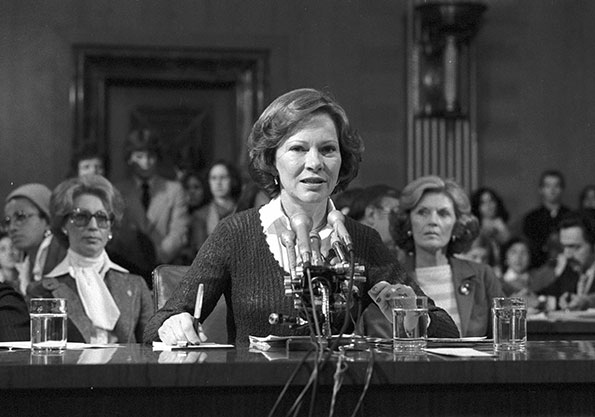
Rosalynn Carter testified before congress for the Mental Health Systems Act, which was signed into law Oct. 7, 1980.
May 1979
Mrs. Carter became the first sitting U.S. First Lady to address the World Health Assembly about findings of the President’s Commission on Mental Health and her ongoing fight to reduce stigma and improve mental health care in the U.S. She emphasized that mental health is an integral part of overall health as well as a basic human right.
November 1979
Mrs. Carter went to Los Angeles to urge Hollywood leaders to tell positive stories that would help diminish the stigma against people with mental illnesses.
1982
Rosalynn Carter received the American Psychological Association’s Presidential Citation from President William Bevan, Ph.D.
November 1985
The first Rosalynn Carter Symposium on Mental Health Policy, “Stigma and the Mentally Ill,” was held in conjunction with the Department of Psychiatry at Emory University School of Medicine.
June 1990
Mrs. Carter again met with writers and producers of the Hollywood creative community to discuss ways to improve public understanding about mental illnesses through the entertainment media.
September 1991
Rosalynn Carter established the Carter Center Mental Health Program.
March 1994
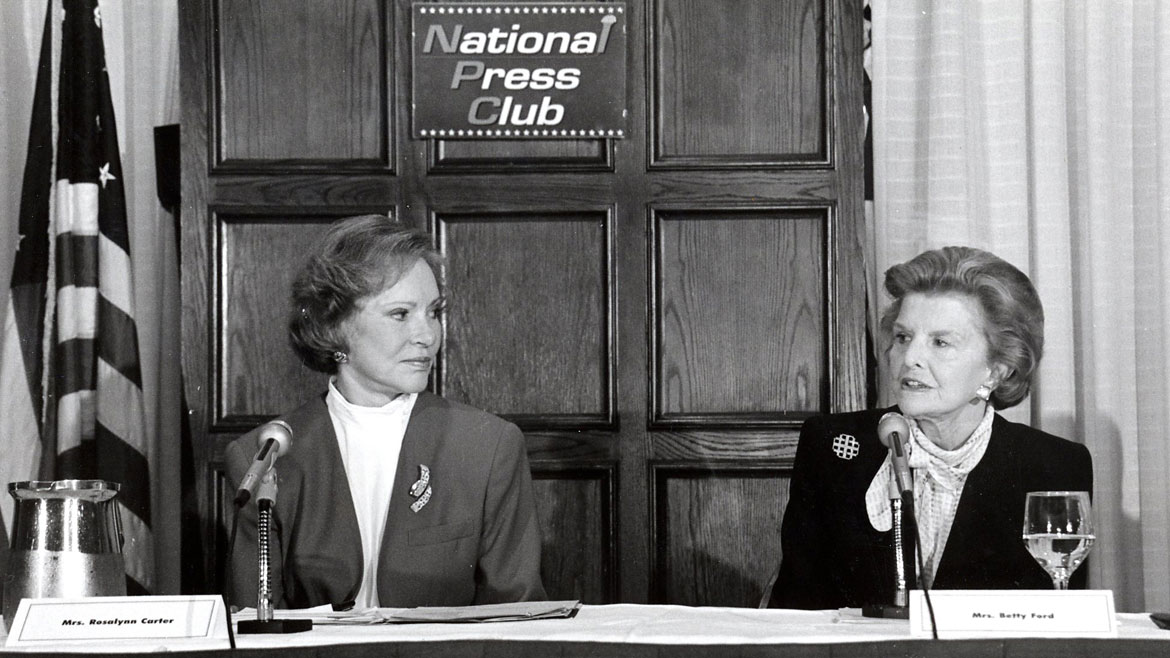
Former First Ladies Betty Ford and Rosalynn Carter testified before Congress in support of including mental health and substance abuse treatment benefits in the national health care reform plan.
Oct. 2, 1995
The first Rosalynn Carter Georgia Mental Health Forum, “Within Community,” was held at The Carter Center.
September 1996
The Committee of International Women Leaders for Mental Health held its first meeting, in conjunction with a meeting of their ministers of health. Eight first ladies and nine personal representatives signed a joint statement committing to advance mental health in their nations.
April 1997
The Rosalynn Carter Fellowships for Mental Health Journalism were established at The Carter Center.
1998
Mrs. Carter wrote the book “Helping Someone with Mental Illness: A Compassionate Guide for Family, Friends, and Caregivers.”
August 1999
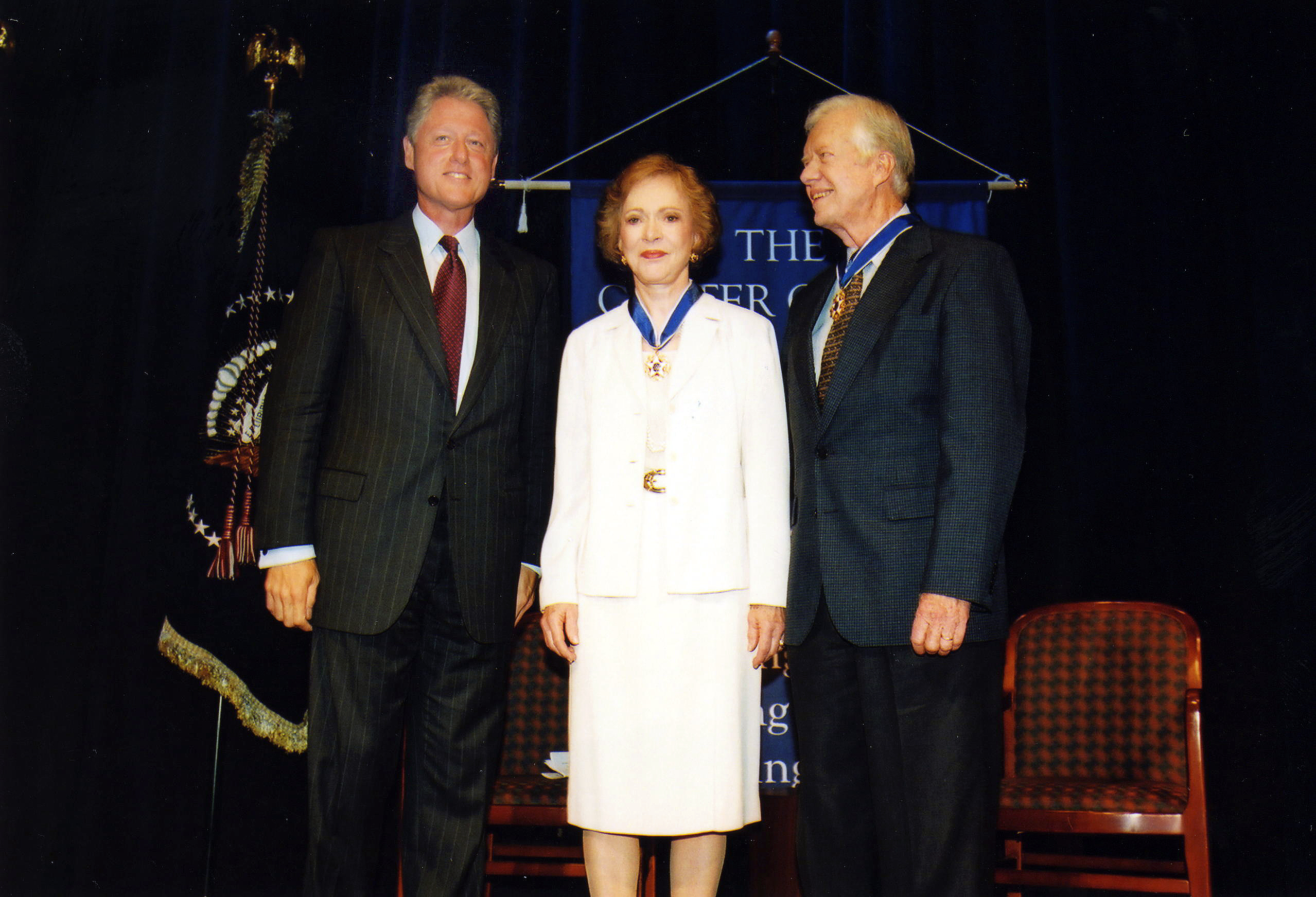
Former U.S. President Jimmy Carter and former First Lady Rosalynn Carter were awarded the Presidential Medal of Freedom.
November 1999
The Rosalynn Carter Symposium on Mental Health Policy previewed the first Surgeon General’s Report on Mental Health, released in December 1999.
2000
“Helping Someone with Mental Illness” by Rosalynn Carter was translated into several Eastern European languages to help advance mental health services in Lithuania, Ukraine, and the nation of Georgia.
November 2000
The Surgeon General’s Medallion was awarded to Mrs. Carter.
February 2003
Rosalynn Carter told the New Freedom Commission on Mental Health convened by President George W. Bush that recovery from mental health conditions was the most significant change in the mental health field since the Presidential Commission during Jimmy Carter’s administration.
May 2004
In an address to the World Health Assembly, President Carter stressed that too many people still do not have access to treatments available for mental health conditions. The message was reinforced during a technical briefing on mental health and substance abuse by a number of countries and by former First Lady Rosalynn Carter.
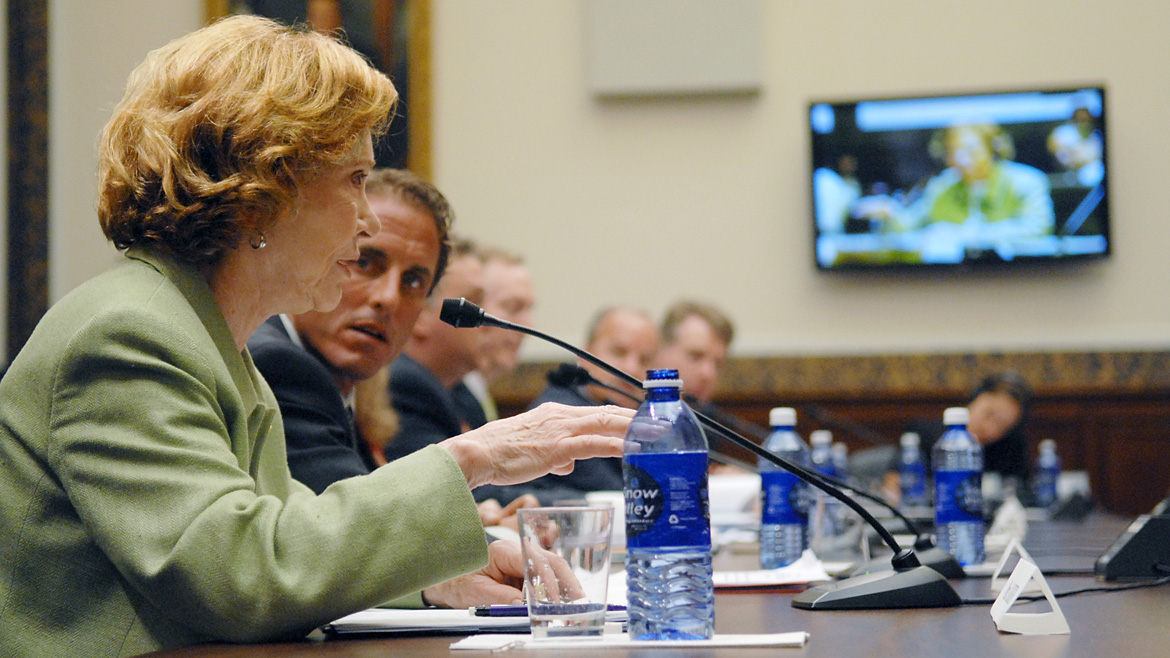
July 2007
Mrs. Carter testified before the House Committee on Education and Labor Subcommittee on Health, Employment, Labor, and Pensions on the need for parity for mental health and substance use disorders in insurance coverage.
April 2010
Rosalynn Carter wrote the book “Within Our Reach: Ending the Mental Health Crisis.”
August 2010
The Liberia Mental Health Initiative was launched to improve access to mental health services and decrease stigma in the post-conflict West African nation.
October 2010
The Carter Center, with other mental health advocates, was named as amicus curiae to a settlement agreement signed by the state of Georgia and the U.S. Department of Justice to address the public mental health system in the state.
May 2017
American Psychological Association President Antonio Puente awarded Rosalynn Carter her second American Psychological Association Presidential Citation.
September 2018
At the direction of Rosalynn Carter, the Carter Center’s Mental Health Program launched a School-based Behavioral Health Initiative in Georgia with the aim of making access to mental health services as common as school lunches.
January 2020
The Carter Center’s Mental Health Program began leading the Georgia Parity Collaborative, with key stakeholders at the state and national level, to advance evidence-based policy change to achieve parity in Georgia.
May 2021
Mrs. Carter received the World Health Organization Director-General’s Award for Global Health during the opening ceremonies of the 74th World Health Assembly.
More
Related Content
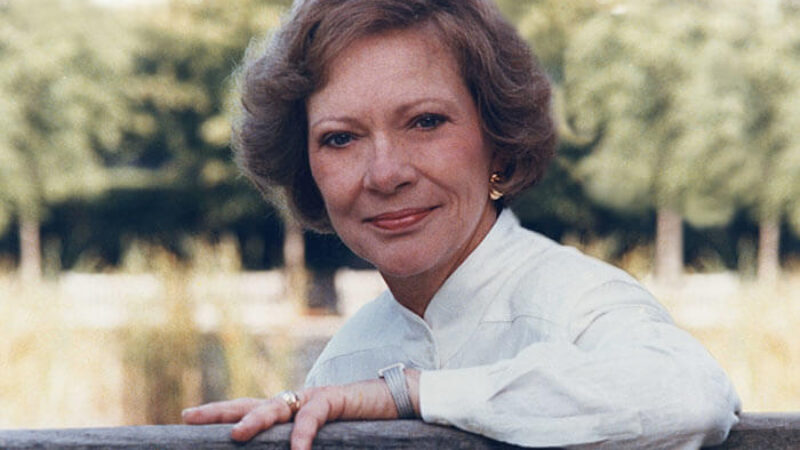
Tribute Website: Honoring First Lady Rosalynn Carter
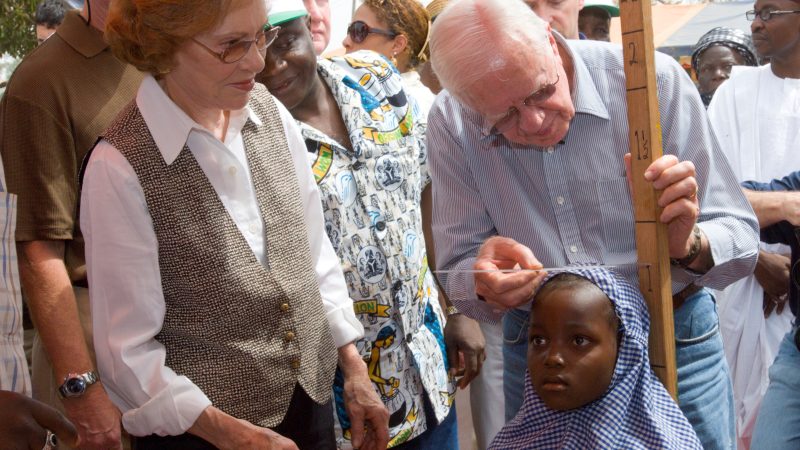
Jimmy and Rosalynn Carter: A Remarkable Post-Presidency
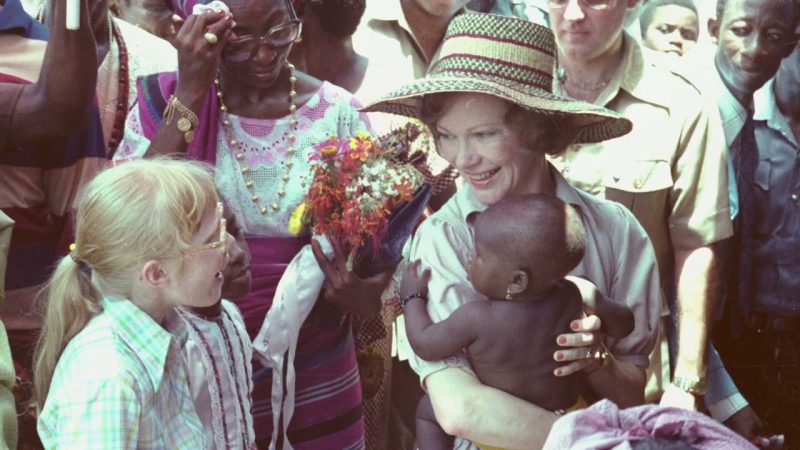
One Year Later: Remembering Rosalynn Carter
Global Impact Starts with You
Your support sustains the Carter Center's mission of waging peace, fighting disease, and building hope around the world.