At his lowest point, Archie Pitah wanted to give up.
He had lived for years with a substance abuse disorder and estranged from his family. Then the 28-year-old Liberian was diagnosed with tuberculosis, an airborne infection spread through close contact with people living with the disease.
He developed a hacking cough. Aches and pains wracked his body. He lost his appetite and dropped weight.
“I broke down, thinking that with TB, you’re already dead,” Pitah said.
When Pitah received a positive TB test, the hospital had run out of medication, worsening his sense of despair.
That’s when everything started to turn around.
Caroline Sonwabe is a TB nurse in Monrovia. She met Pitah when he came to her clinic for the medication the hospital couldn’t provide. Luckily for him, Sonwabe is one of dozens of TB nurses who received training in mental healthcare basics as part of the Carter Center’s longtime efforts to help improve Liberia’s mental healthcare system.
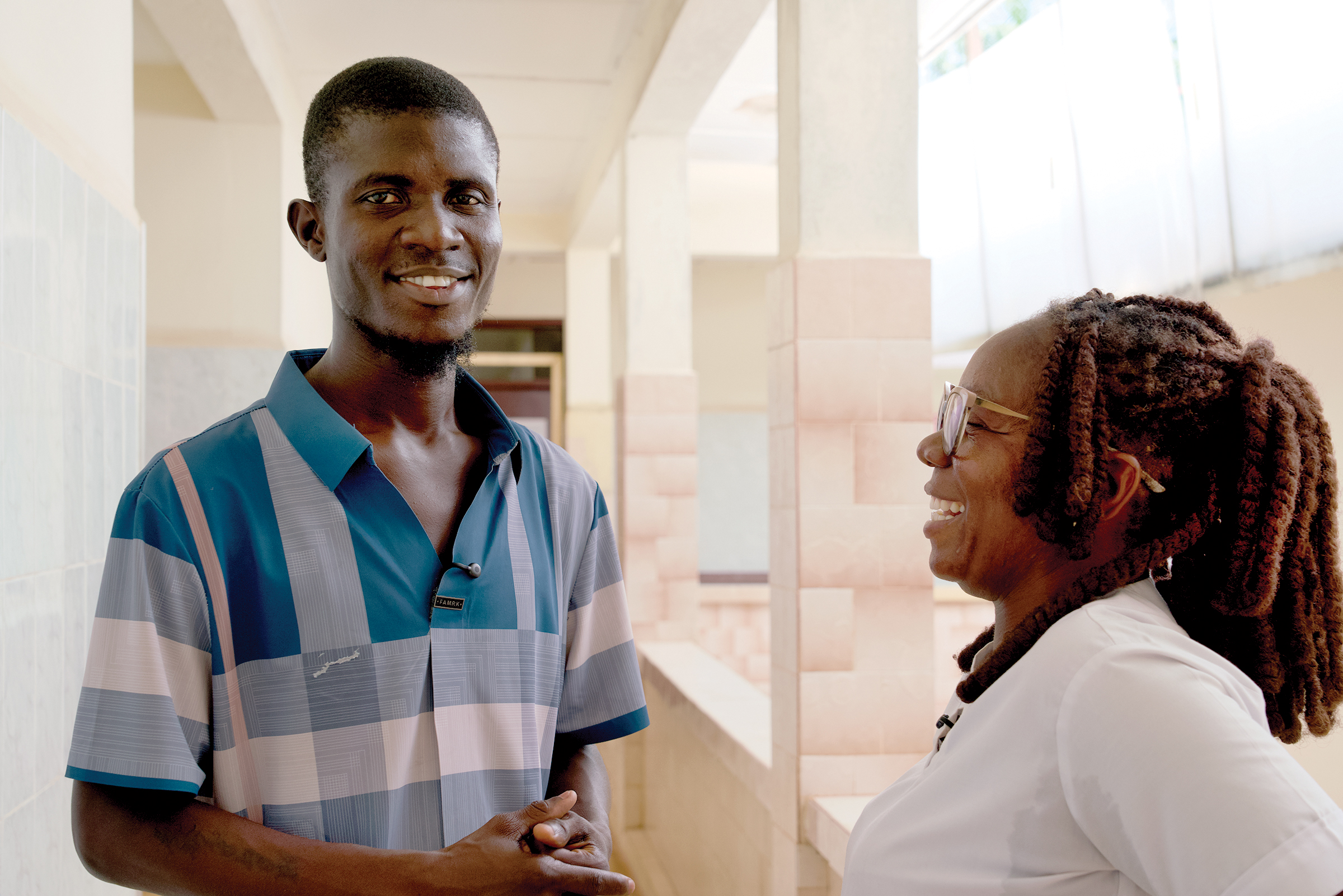
Sonwabe helped Pitah realize he wasn’t alone in his struggle — many TB patients often experience depression.
“Liberia is a high-burden tuberculosis country, which makes it a perfect country for integration of TB and mental health services,” said Dr. Kashef Ijaz, vice president for health programs at The Carter Center. “That means once someone gets diagnosed in a clinic, their related mental health needs can also be addressed.”
Sonwabe helped keep Pitah’s spirits up, inspiring him to remain positive, even when things looked bleak. She also made sure he never forgot to take his medicine, which Pitah struggled to do at first, frustrated by the large size of the pill.
“With TB patients, they are already depressed. They say, ‘I don’t think I will live,’” Sonwabe said. “After the training, I got to know that you need to talk to your patient on every visit. Each time they come, I tell them TB can be cured.”
As Pitah began to turn his life around — beating his drug addiction and moving back in with family — Sonwabe stood by him.
She would call to help connect Pitah with resources. Other times she called to share kindness and motivations, or just to chat.
One day, Sonwabe called with an opportunity: The Carter Center needed a spokesperson to help raise awareness about resources available to combat tuberculosis. She thought he’d be perfect for the job.
Working with the Center, he appeared on radio shows and traveled to rural villages. Pitah took pride in the opportunity to help others.
“If people are out there listening to my story, they can get the courage to do the same,” he said. “Because if it can happen for me, it can happen for other people.”
With the stipend he received from that work, Pitah was able to complete an introductory computer course. He dreams of attending college and pursuing a career in information technology.
Sonwabe has stayed in touch with Pitah even after his recovery. Recently, he’s been able to return the kindness by helping her with computer issues.
It’s a positive health outcome that started with care and blossomed into friendship. By seeing Pitah as more than just his disease, Sonwabe helped change his life.
“She didn’t treat me like a patient,” he said, “but like her own son.”
More Stories
Global Impact Starts with You
Your support sustains the Carter Center's mission of waging peace, fighting disease, and building hope around the world.