A Flight for Sight: Nine Children, One Plane, and a Chance to See Clearly
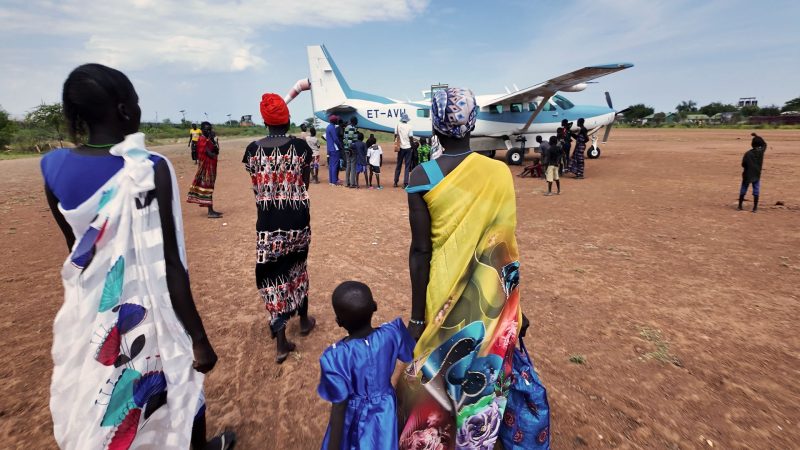
Caregivers and children prepare to board the plane that will take them from Pibor to the capital, Juba. (All Photos: The Carter Center)
It should take 30 years for someone to reach the stage where they’re in danger of going blind, but in South Sudan we’re seeing it in children as young as 3, 4, or 5.
The blue-and-white prop plane descended through clear skies and skimmed along a scorching runway. After it slowed to a halt, five children — some of them barefoot — made their way down the plane’s three deep stairs, blinking in the harsh sunlight as they took in this place where they’d suddenly found themselves.
Just an hour earlier, they’d been lounging in a field waiting for the plane — the first they’d ever ridden — to take them from their villages in rural South Sudan to its capital, Juba.
They and four other children who arrived on a second flight were there for the same reason: to undergo eyelid surgery to halt damage caused by trachoma.
The state of their eyes shocked public health experts.
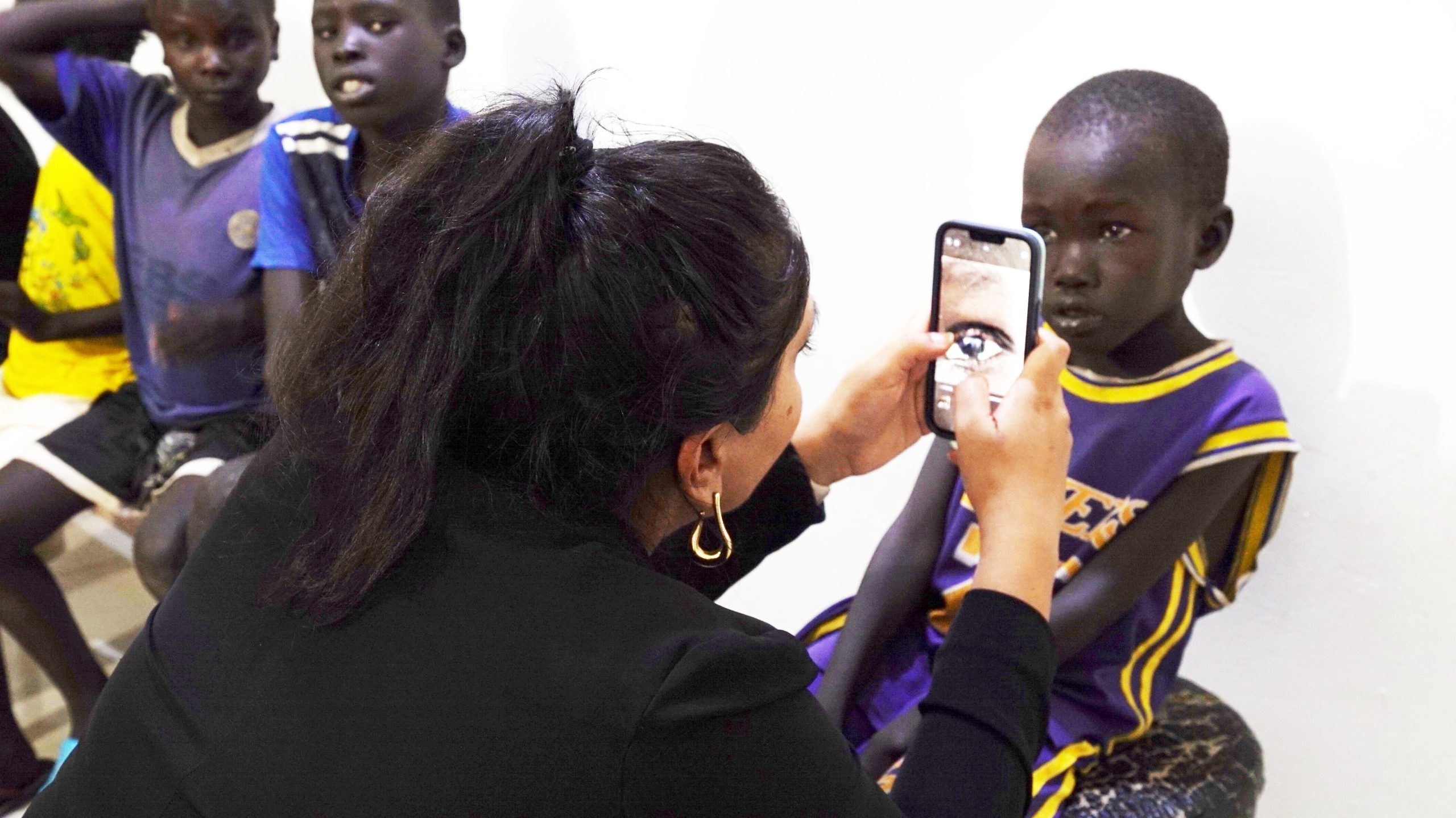
Trachoma is a bacterial eye infection common where clean water and sanitation are scarce. Repeated infections lead to scarring, causing eyelids to turn inward and eyelashes to scratch the cornea — damage that is painful and can eventually result in blindness.
This process usually plays out over decades, said Angelia Sanders, a senior associate director in the Carter Center’s Trachoma Control Program. “It should take 30 years for someone to reach the stage where they’re in danger of going blind, but in South Sudan we’re seeing it in children as young as 3, 4, or 5.”
A simple surgery can correct an eyelid’s orientation. Carter Center-supported surgeons use local anesthesia to perform the procedure on thousands of adults each year. But children can’t be counted on to lie still as a scalpel approaches their eyes. They need general anesthesia, and that means specialists.
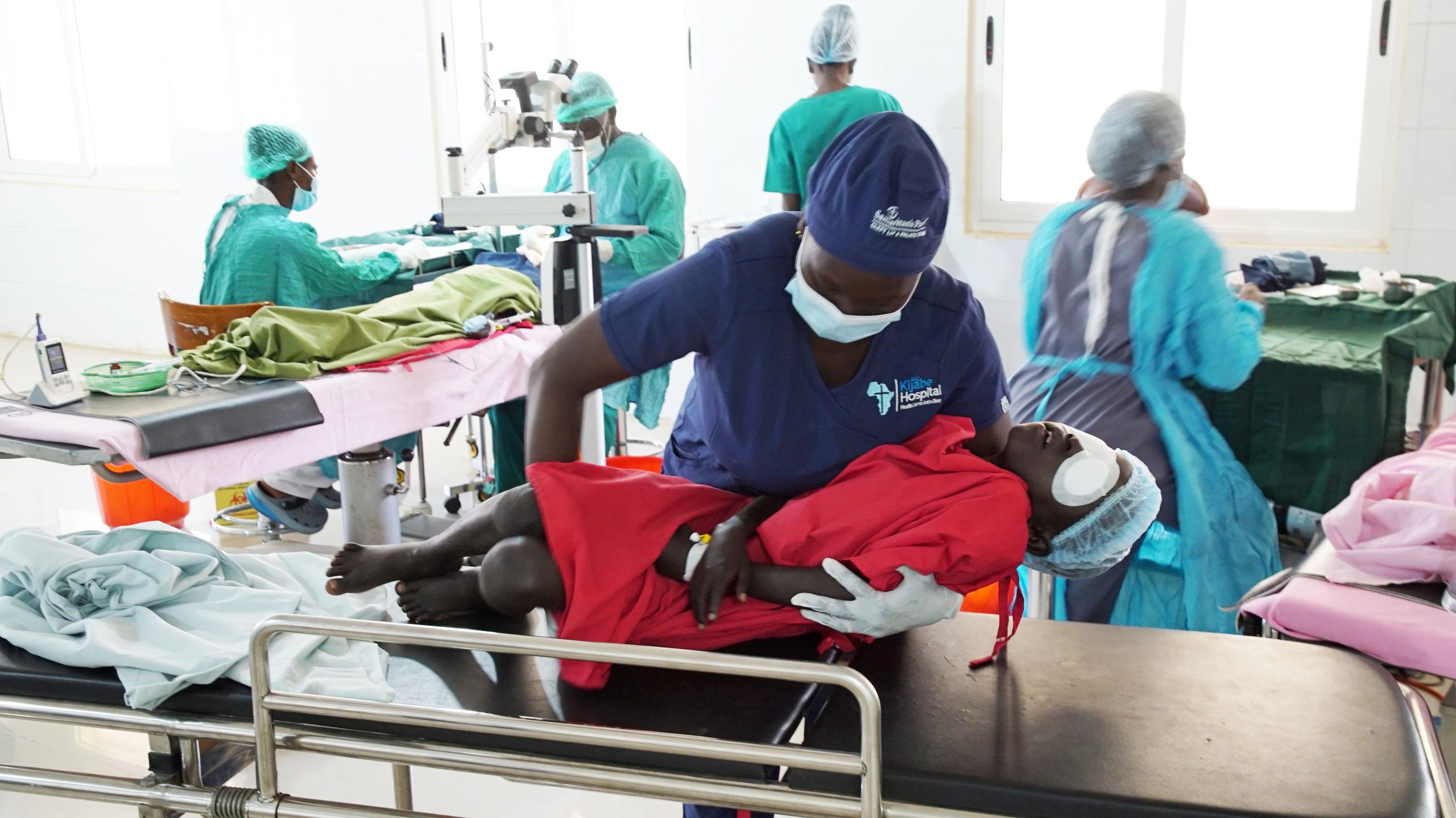
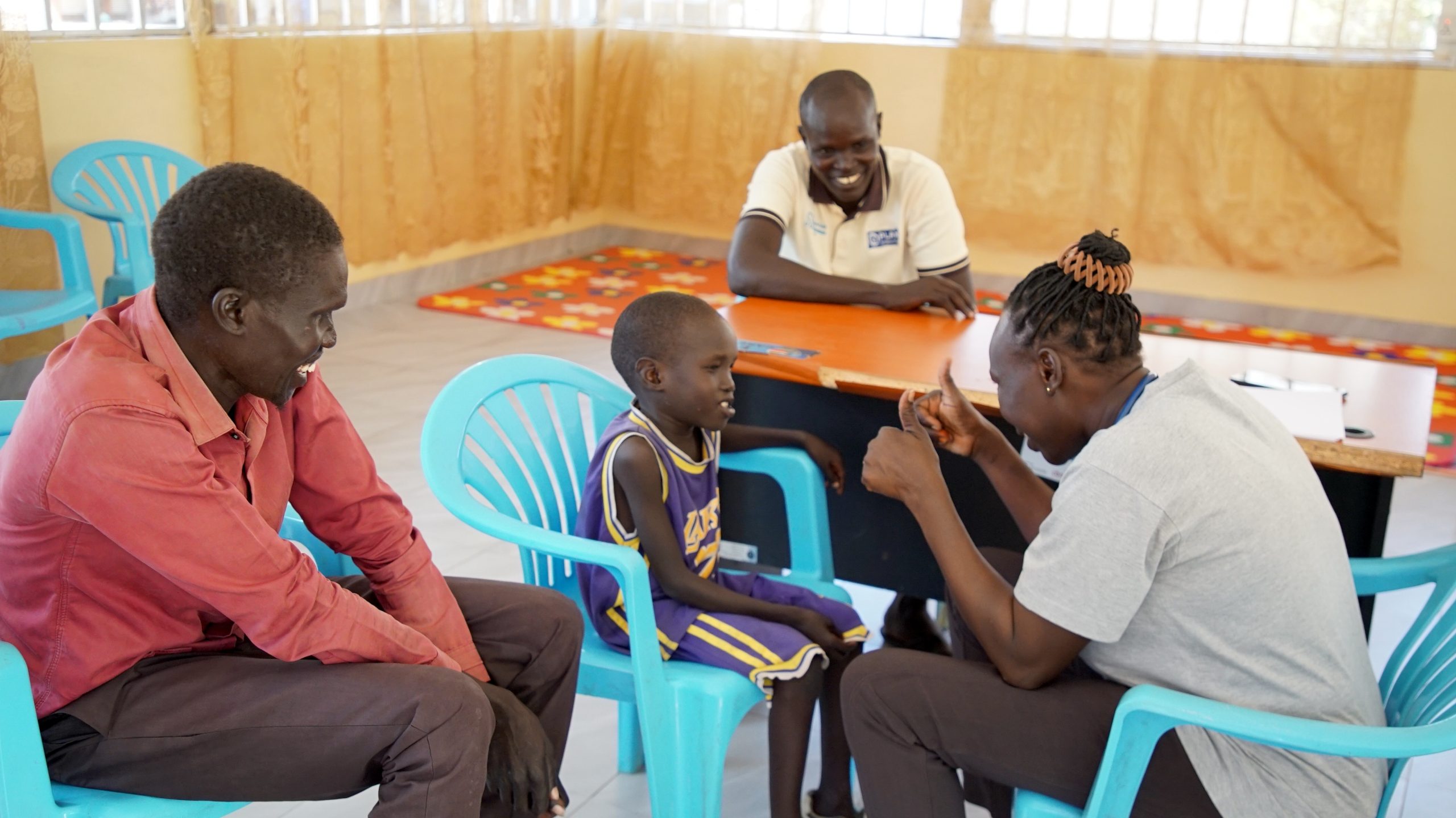
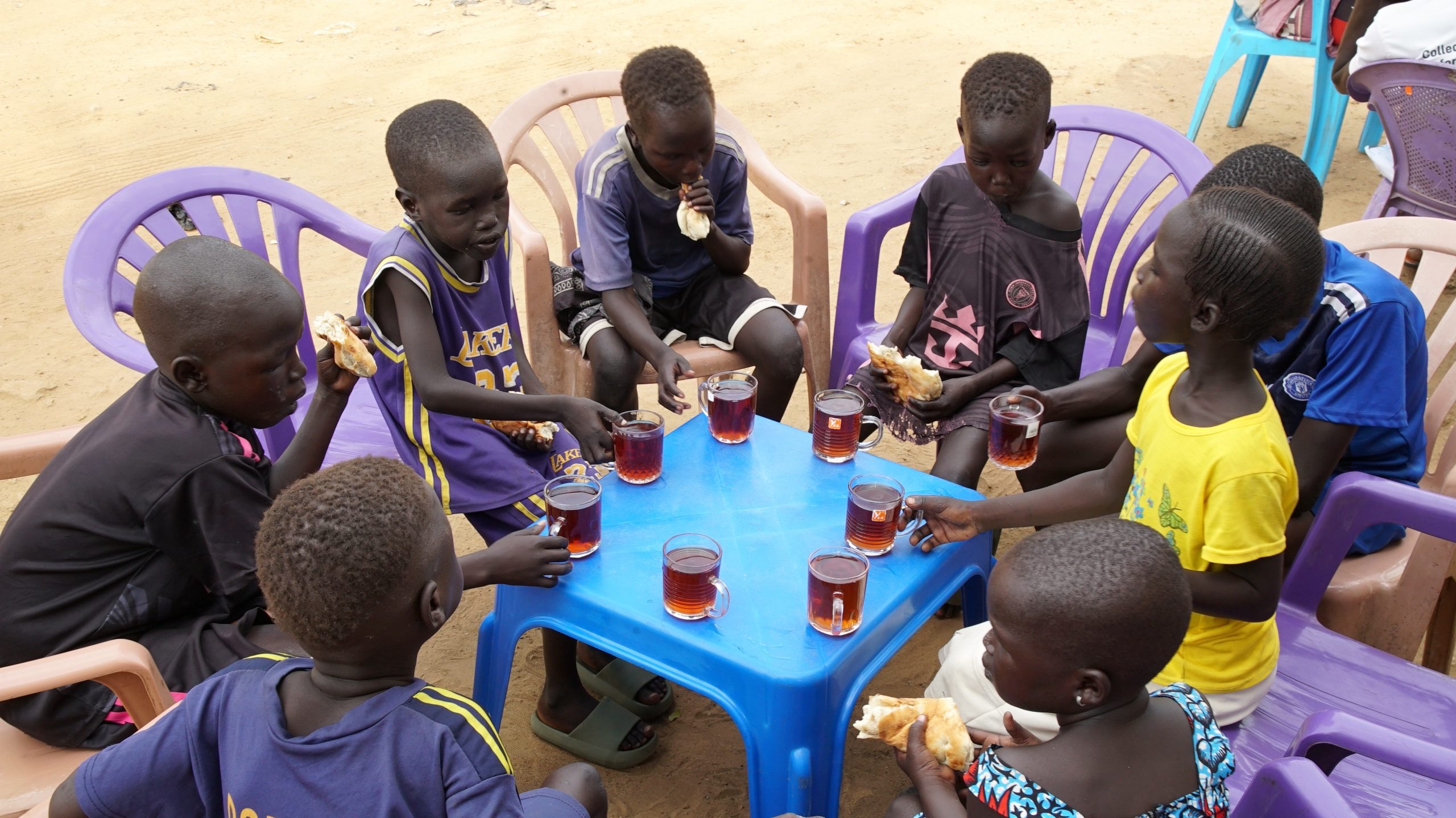
That’s why The Carter Center chartered the little prop plane — to bring the children to South Sudan’s only pediatric eye clinic. In all, the kids and their caregivers spent 15 days at the Ministry of Health’s Buluk Eye Centre, sleeping side by side in a ward cooled only by fans, taking morning tea at a stand just outside the compound’s gates, waiting patiently in blue plastic chairs until their
next eye check or meal.
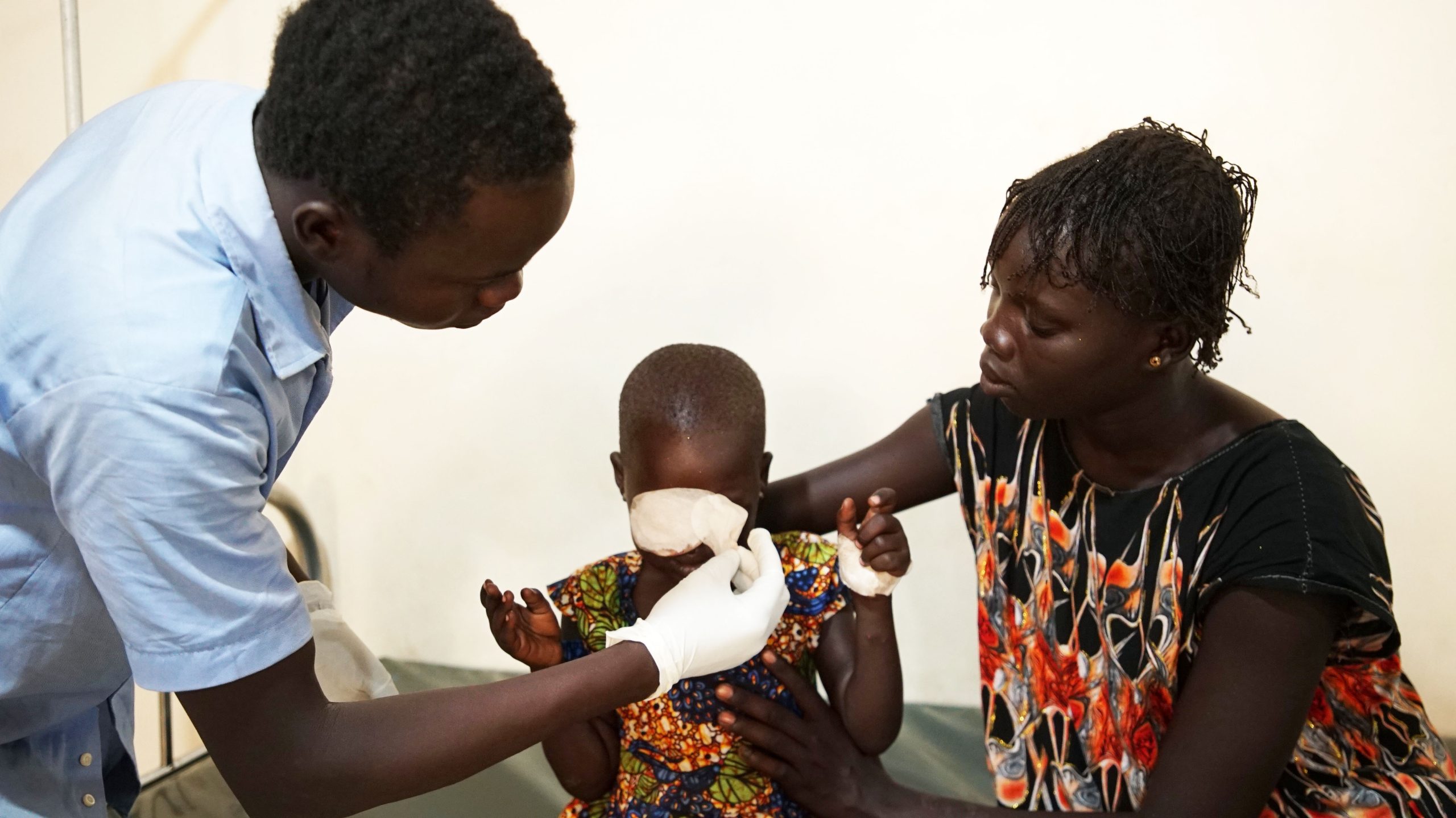
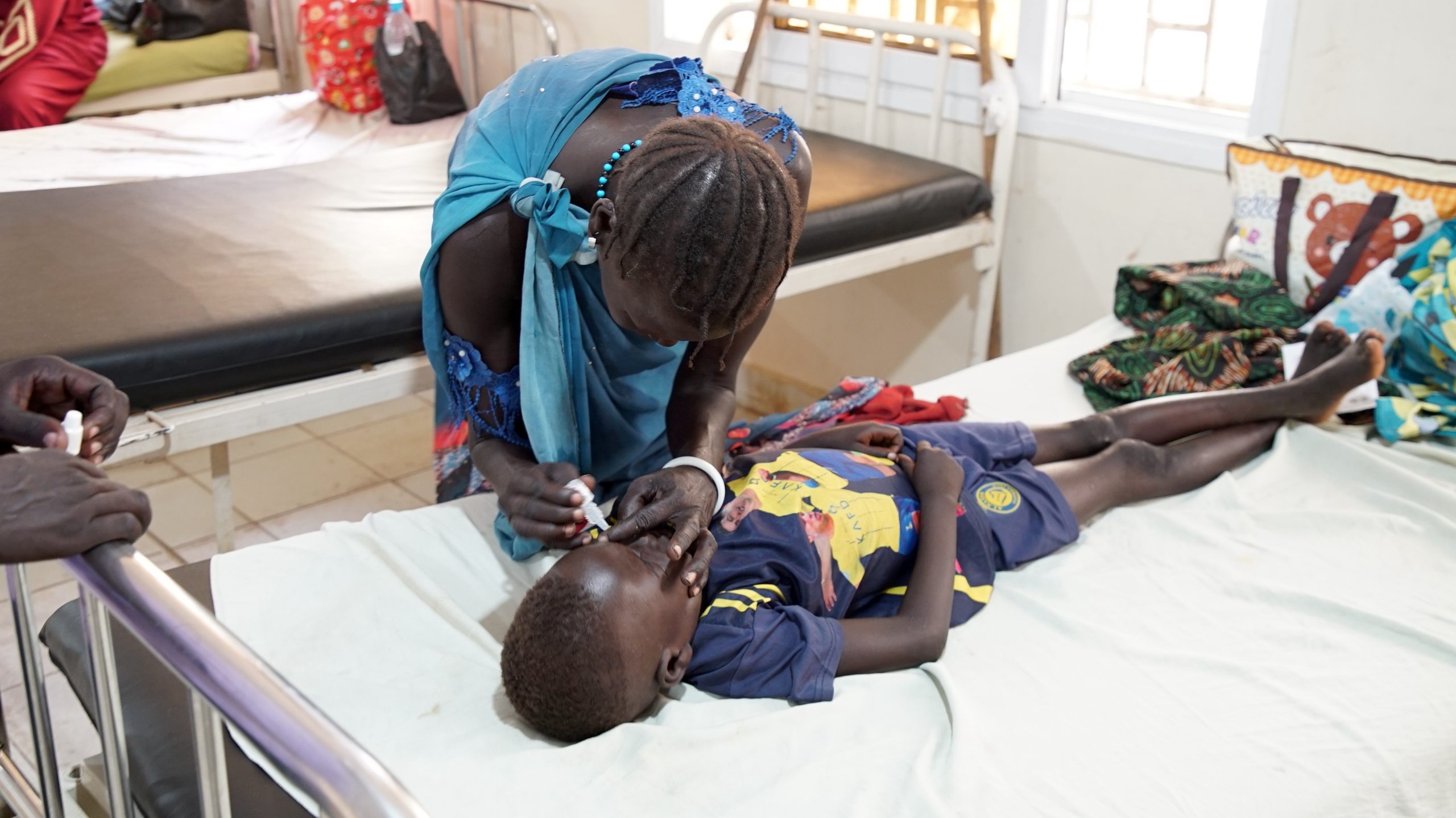
The surgeries were a success, and the children clambered back up the plane steps free from pain and no longer in danger of imminent blindness.
The Carter Center is now working to help the dozens of other children in South Sudan like them, so that they, too, can enjoy brighter futures — ones in which school, jobs, and a full life are all possibilities
Related Resources
More Stories
Global Impact Starts with You
Your support sustains the Carter Center's mission of waging peace, fighting disease, and building hope around the world.