‘I thought I understood the health care system. Then caregiving happened to me.’

By 
Kat McGowan

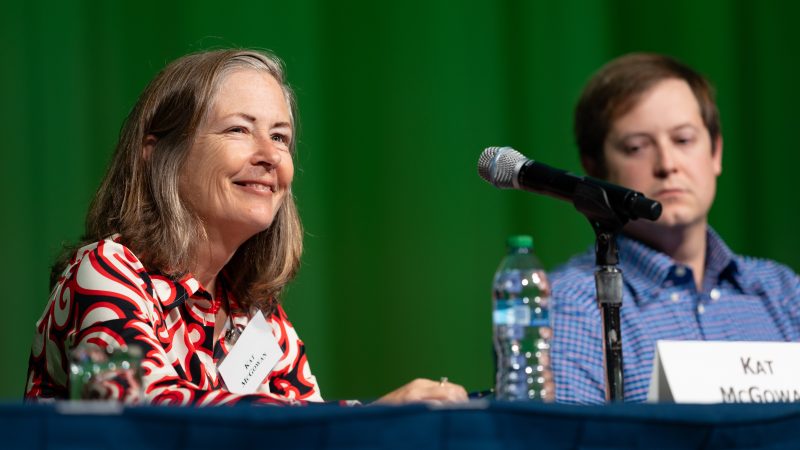
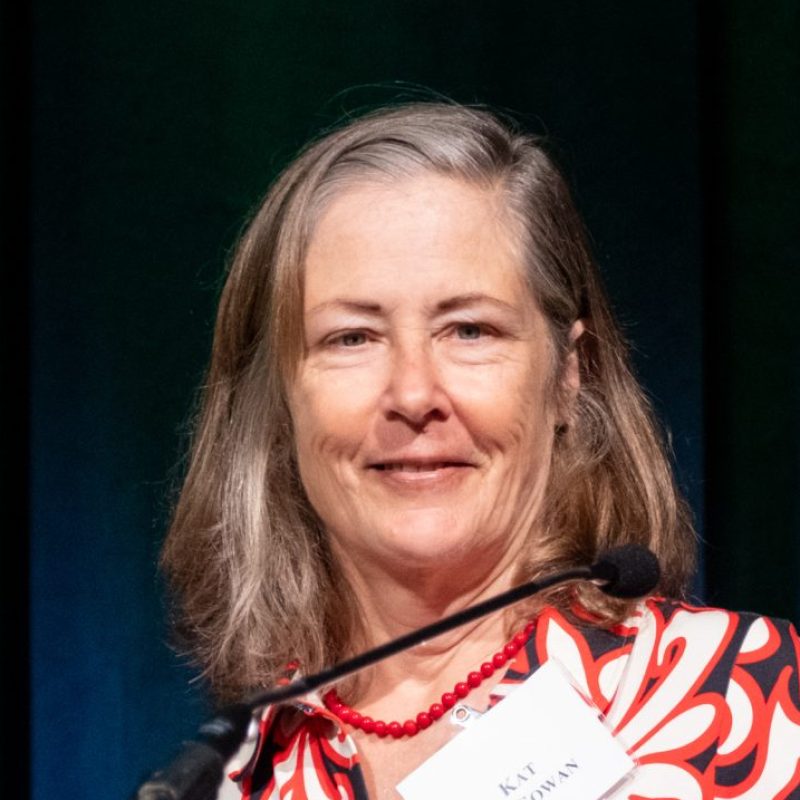
Kat McGowan speaks during the annual meeting of the Rosalynn Carter Mental Health Journalism Fellowship. (Photo: The Carter Center)

Notes from the Field

Throughout my career as a health and science journalist, I’ve covered bio medical research, spent hours talking to doctors, and translated complex medical information for general audiences.

I thought I understood the health care system. Then caregiving happened to me.

First, my sister-in-law was diagnosed with a rare neurodegenerative disease related to Parkinson’s. My partner and I scrambled to help her, and I quickly discovered how confusing and exhausting it is to navigate that world — even
for someone who speaks the language.

A few years later, both of my parents began showing signs of dementia. For four years, I was intensively involved in their care. They both passed in 2023.

All along, I kept thinking, “I know how to talk to doctors. I know how to find information. And I am barely keeping my head above water.” It’s not that the caregiving system is bad — it simply doesn’t exist. There are resources, but you have to be incredibly creative and tenacious to find them and make them work. How do people do it?

The answer, I learned, is that most people do it alone — and in silence. There are
an estimated 63 million unpaid family care givers in the U.S. That’s the same number as parents with children under 18 at home. Yet caregiving for adults is almost invisible in our culture, as well as in our journalism.

This personal and professional path led me to the Rosalynn Carter Fellowship for Mental Health Journalism. The fellowship made it possible for me to publish more than 10 stories with NPR online that explored caregiving as an emotionally complex experience. The caregivers I interviewed repeatedly described a bittersweet combination of love, duty, frustration, and grief. Their stories aren’t heroic, nor are they tragedies. They’re nuanced and real. And they’re the kind of stories readers want.

NPR put out a call for caregiving stories. Nearly 600 people responded — including people whose time as caregivers ended decades ago.

People need to talk about it. I’m here to listen.

More Stories

Read More
Read More
Read More
A young man looks back at the camera and smiles.