Democracy is something that requires vigilance. It’s something that we all have a responsibility to work to protect. That is as true here in the United States as it is in any other part of the world.
The Carter Center has long been known for its election observation work around the world, having monitored more than 125 elections in over 40 countries since beginning this work in 1989. But starting in 2020, as mistrust in elections grew in the United States during the COVID-19 pandemic, the Center saw a need at home.
“We do so much work to support elections in volatile and difficult situations and contests internationally,” said Avery Davis-Roberts, the Center’s Democracy Program director. “Why would we not do that here?”
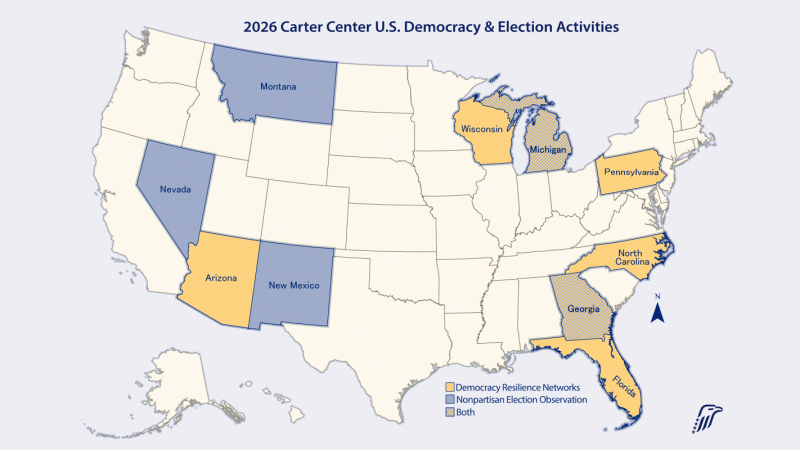
For the 2026 midterm elections, The Carter Center’s Democracy Program is supporting election integrity in five states: Georgia, Michigan, Montana, Nevada, and New Mexico. Apart from Georgia, where the Center is based and able to lead the charge, partnerships with state-based networks are key to engaging and training citizen observers to serve their own communities.
All told, for the midterm elections, about 1,000 citizen observers have signed up to take part in this crucial work.
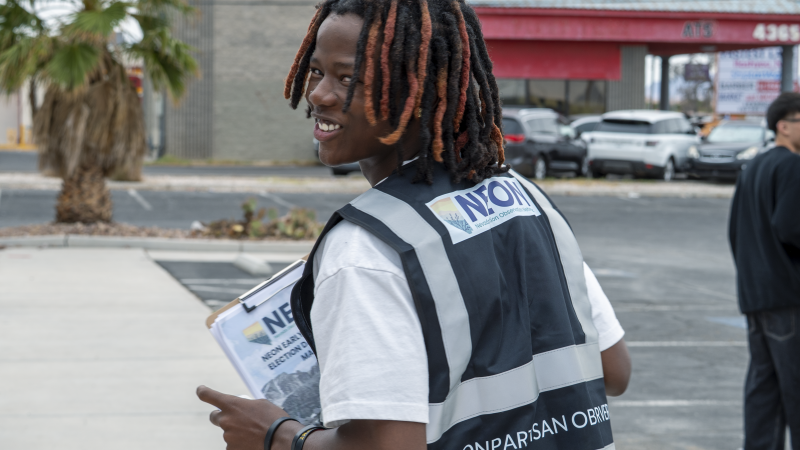
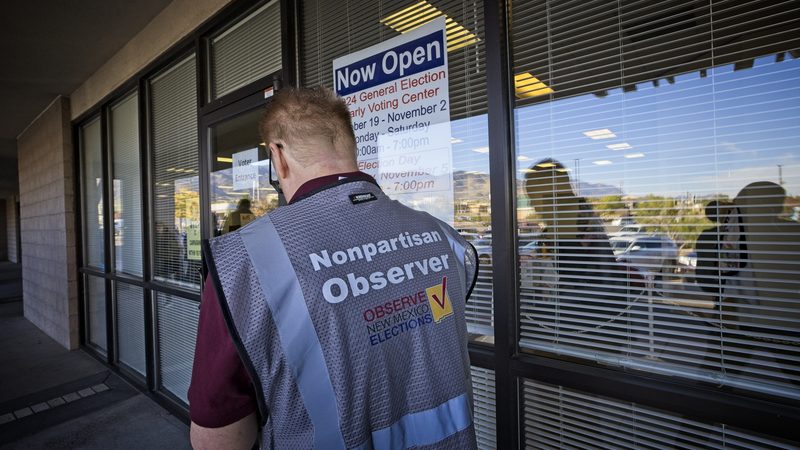
With Carter Center support, the Nevada Election Observation Network (NEON) is training nonpartisan citizen observers for the 2026 midterm elections. (Photo: The Carter Center)
Filling a Gap
Nonpartisan election observation is common practice in other parts of the democratized world, but it’s less prevalent in the U.S., where older election laws in some states may not allow for the practice. Instead, partisan observers are the norm. But they are enlisted to protect the interests of political parties, candidates, and ballot initiatives. Then, there are organizations that focus on individual voters and their rights.
The Carter Center stepped in to address what’s been missing.
“We saw a real need for there to be a trusted voice that was really just speaking to the process on behalf of all voters in a very nonpartisan way. And that’s where the groups we work with come in,” said Sarah Cooper, a senior associate director in the Democracy Program, who is leading the Center’s U.S. elections project.
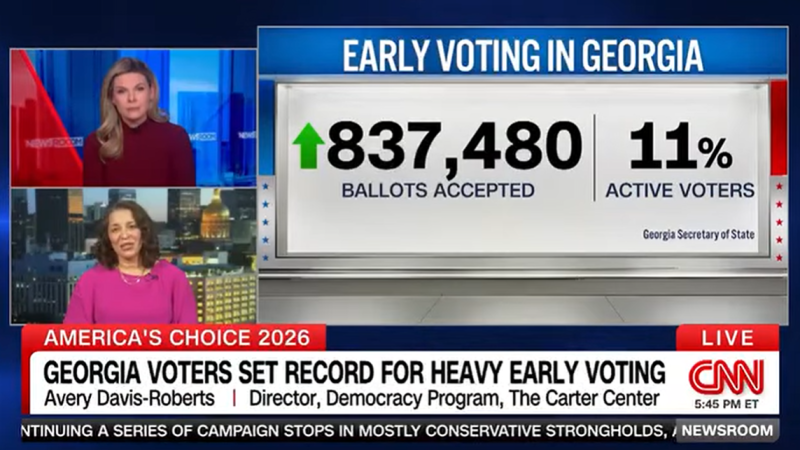
The work involves observing pre-election activities, such as the testing of voting equipment and the training of poll workers. It’s reporting on whether elections are transparent, procedures are applied correctly and consistently, and administrators have effective mechanisms to address issues should they arise. It often also includes observing postelection audits, which help ensure the accuracy of vote counts, as The Carter Center will do in Georgia.
Whether in bustling cities or rural communities, nonpartisan citizen observers — no matter their politics — bolster confidence in the electoral system. In fact, a 2022 study out of MIT found that 61% of Americans, Democrats and Republicans included, would have more confidence in their state’s elections if they knew nonpartisan poll watchers had monitored the process.
Beyond Elections
Faith in democracy isn’t built just through elections. A healthy democracy allows for opposing opinions without fear of violence and invites everyone to the table, irrespective of their differences, political or otherwise.
Through the Conflict Resolution Program, The Carter Center supports cross-partisan, locally led networks — called democracy resilience networks — to foster respect in communities and tone down toxic rhetoric.
“We are trying to turn disagreement, which we know is a foundational aspect of American democracy since its founding, from a potential breaking point to a starting point for conversation,” said Lauren Kirby, a senior associate director in the Conflict Resolution Program.
Democracy resilience networks are currently active in seven states: Arizona, Georgia, Florida, Michigan, North Carolina, Pennsylvania, and Wisconsin. They include more than 6,000 members and bipartisan network leads who speak publicly, participate as advisors, and oversee public community discussions and special events.
Work in Action
Recent events have included a tour in North Carolina to bring transparency to the electoral process; an awards dinner in Georgia to recognize people ranging from a county-level polling manager to the secretary of state; and an address by four former Michigan governors — two Democrats and two Republicans — who banded together to speak about the dangers of division and responsibility of everyday citizens.
Efforts to build bridges during these tense and siloed times don’t stop there.
The Georgia Democracy Resilience Network launched Faith Forward Democracy to unite faith leaders from across the spectrum to address discord in communities and families. And that effort inspired the Center to also invest in younger generations in the Atlanta area.
A project called Emerging Leaders for Community Change is empowering young people — representing different political backgrounds, faith traditions, and socioeconomic backgrounds — to engage in dialogue and work together to bring down the temperature and effect lasting change in their own communities.
“We live in a diverse society where conflict is inevitable,” said Cate Tedford, a student at Emory University’s Candler School of Theology and a participant in the first cohort. “Learning how we can work together is crucial if we want to create any semblance of a better world.”
Get Involved
Nonpartisan Election Observation
The Carter Center is supporting election integrity in five states:
Democracy Resilience Networks
We support cross-partisan, locally led networks in seven states:
- The Arizona Democracy Resilience Network
- The Georgia Democracy Resilience Network
- Sunshine 100 (Florida)
- Michiganders for Civil Resilience
- The North Carolina Network for Fair, Safe, and Secure Elections
- The Pennsylvania Alliance for Civic Trust (website coming soon)
- Wisconsin Alliance for Civic Trust
Latest News and Stories

Global Impact Starts with You
Your support sustains the Carter Center's mission of waging peace, fighting disease, and building hope around the world.