Empowering Young People to Tackle the American Divide
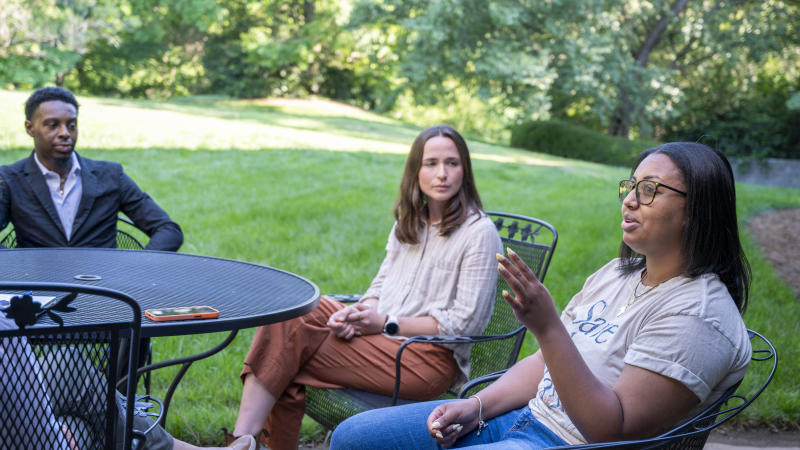
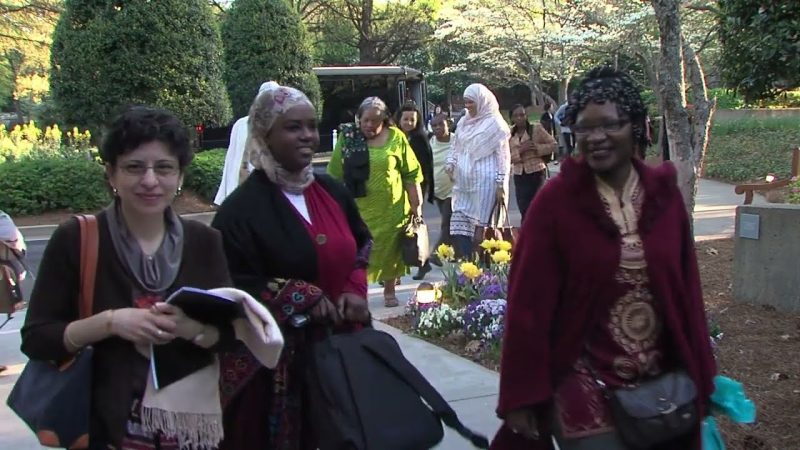
“The leaders and activists we look up to were our ages when they were making change in the societies where they worked,” says ELCC cohort member Siham Ahmed, beside Cate Tedford and Chris Smith.
At a time of deep divisions in our country, when younger generations may be struggling to find hope, The Carter Center introduced a program to help them be part of the solution.
Emerging Leaders for Community Change (ELCC), launched in September 2025, supports and invests in young people — believing that they have the power to build bridges, empower future leaders, and effect lasting change.
The first cohort of 25 participants, ages 18-30, came from across metro Atlanta and represented various political ideologies, faith traditions, and socioeconomic backgrounds.
“We live in a diverse society where conflict is inevitable,” said participant Cate Tedford, a student at Emory University’s Candler School of Theology. “Learning how we can work together is crucial if we want to create any semblance of a better world.”
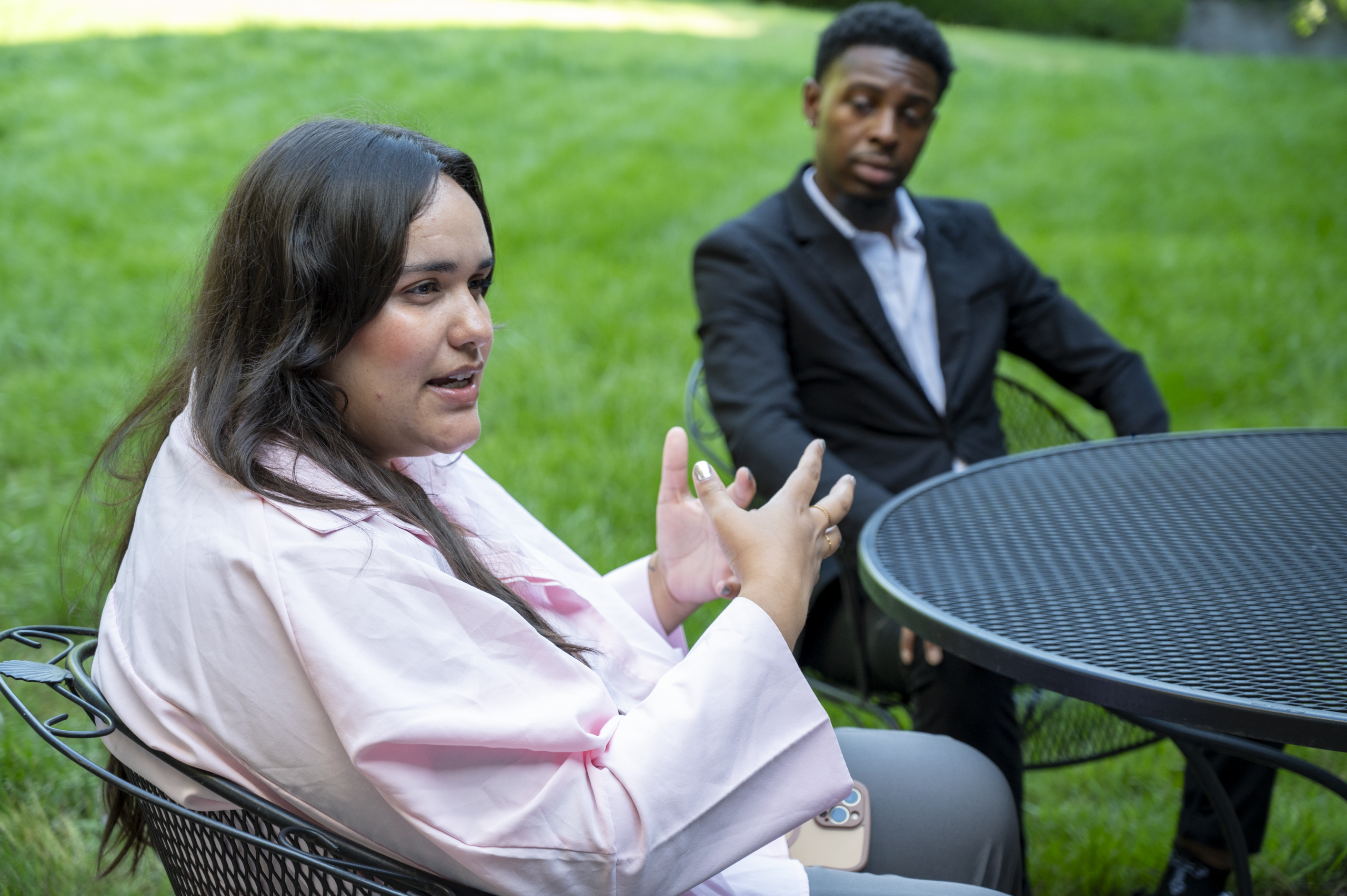
Away From Echo Chambers
Starting with a kickoff retreat in rural Georgia, members put away their phones, checked out of their echo chambers, and got down to real discussions. In the months that followed, they attended expert-led workshops to strengthen their conflict-resolution skills, laid the foundation for community change projects, and grappled with questions to reframe their efforts.
What if, instead of tearing people apart, conflict could be used to fuel positive action? Rather than focus on what divides us, how might focusing on commonalities shape conversations? Why should young people wait to have a seat at the table, when they’re left with the consequences of older generations’ creation?
Chris Smith, an Atlanta radio show producer, always wanted to find a way to make a community-wide impact but didn’t know where to start.
“Growing up where I grew up, I never saw anything like this,” he said. He jumped on the ELCC opportunity as soon as he saw it, calling it “a breath of fresh air.”
Siham Ahmed, a recent graduate of the Rollins School of Public Health at Emory University, echoed his sentiments.
“Programs like this don’t exist. I’ve looked for them,” she said. “These in-person conversations and workshops taught me a lot about the relationships I want to build and foster moving forward.”
Putting Work Into Practice
Participants used what they learned to execute hyperlocal community projects. Some set out to host difficult political dialogues on their college campuses. A group that included Tedford partnered with Interfaith Atlanta to hold a multifaith youth summit, the goal being to inspire young people to work together for the common good. Smith hit the streets with others — and his microphone — to ask questions about hot topics and give often overlooked community members, such as homeless people, a voice through social media. Ahmed helped host a program to tackle issues of food insecurity.
“Outwardly, we may look like we have different values and opinions, but there’s a lot of good we can see in one another,” said Jasmin Sosa, who works for UNDIVIDED, a national nonprofit that activates communities for racial healing, solidarity, and justice.
The inaugural ELCC program wrapped up in May. Recruitment is now underway for the next ELCC cohort in Atlanta. If all goes as planned, the Center hopes to institute similar programs in other parts of the country next year.
“Witnessing the transformative potential of this optimistic and creative group has been both inspiring and grounding,” said Dana Smiley, a senior program associate in the Center’s Conflict Resolution Program, who manages ELCC. “It’s reinforced our commitment to supporting the emerging bridgebuilders our country so desperately needs.”
More Stories
Global Impact Starts with You
Your support sustains the Carter Center's mission of waging peace, fighting disease, and building hope around the world.