Mali

Active

Guinea Worm

Current Status: Endemic

In 2003, in conjunction with the U.S. Peace Corps, the Center and the Mali Guinea Worm Eradication Program began offering intensive health education in the three endemic districts of Gao, Ansongo, and Gourma Rharous.

A military uprising in March 2012 forced the president out and created a leadership vacuum, allowing rebels to seize the three northern regions, the most endemic areas of the country. As a result of the turmoil, Mali’s Guinea Worm Eradication Program was rendered nonfunctional as program participants fled the fighting.

In 2013, after the French retook the areas, the Guinea worm program reestablished itself.

Our Work and Methods
Guinea worm prevention activities implemented in Mali’s communities include:

  • Education on proper use of and distribution of nylon filters to strain out the water fleas that host the infective larvae
  • Monthly treatments of stagnant ponds with ABATE® larvicide (donated by BASF)
  • Voluntary isolation of patients in case containment centers
  • Direct advocacy with water organizations
  • Increased efforts to build safer hand-dug wells

Village volunteers, who are trained, equipped, and supervised by the program, carry out monthly surveillance and interventions.

Insecurity has impeded program activities since the coup in 2012. Mali’s Ministry of Health, as well as regional and local health leaders, held a workshop with community representatives to discuss local peace, conflict, and health issues in September 2020, assisted by us.

In recent years, a small number of Guinea worm infections have been detected in animals in Mali; we are working to determine their origin and prevent transmission to humans.

Impacts

Mali made vast improvements in surveillance and implementation of the strategies to contain Guinea worm cases within 24 hours of detection at health centers, which is imperative to stopping spread of the disease.

The latest information about Mali and Guinea worm disease can be found in our news section.

Legacy

Trachoma

Legacy

Improving Health

Active

Conflict Resolution

We help Mali’s Ministry of Health fight neglected tropical diseases, like Guinea worm and trachoma.

Since 2012, conflict has scarred northern and central Mali. Violence between communities and armed groups, some connected to terrorists, has forced tens of thousands of people to leave their homes. This makes our work to eliminate Guinea worm disease and control trachoma very difficult.

Our Work and Methods
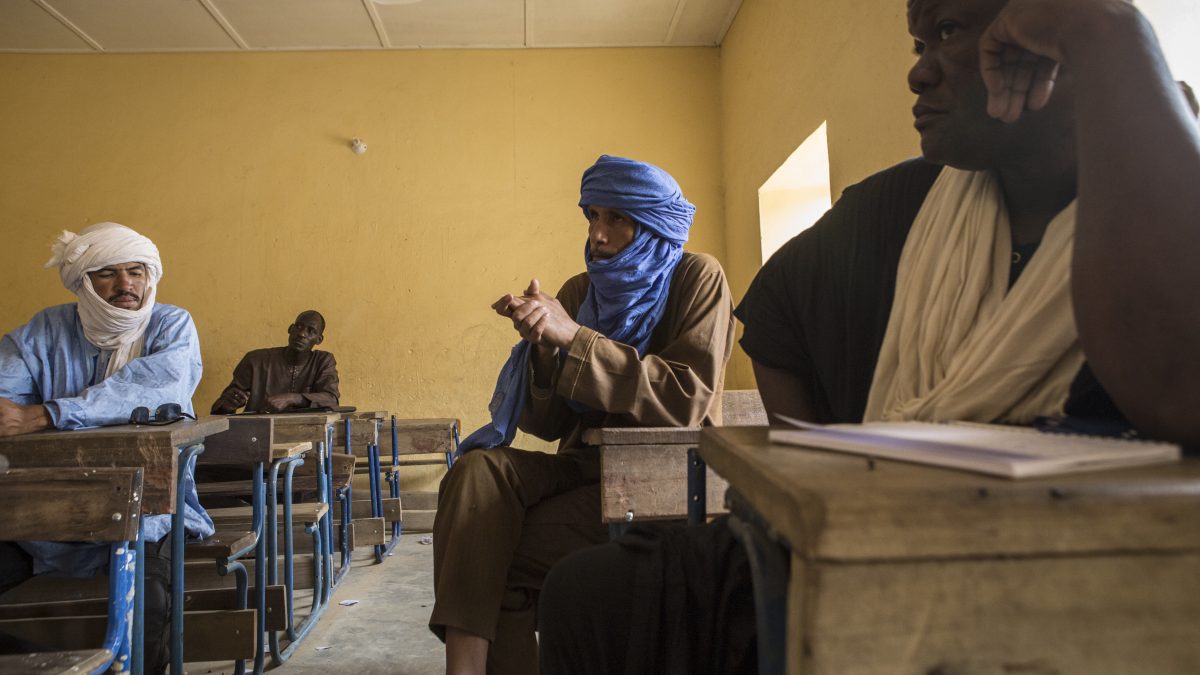
To reach remote areas in dire need of basic health services, we use a community-based approach. By providing the tools and the platform for dialogue between health workers and local communities, we aim to:

  • Reduce violence
  • Create conditions that would allow for better access to health and disease-eradication services in central Mali
Legacy

Observing Mali’s 2015 Peace Accord

Legacy

Rule of Law

Legacy

Democracy

Related Content

Read More
Read More
Read More