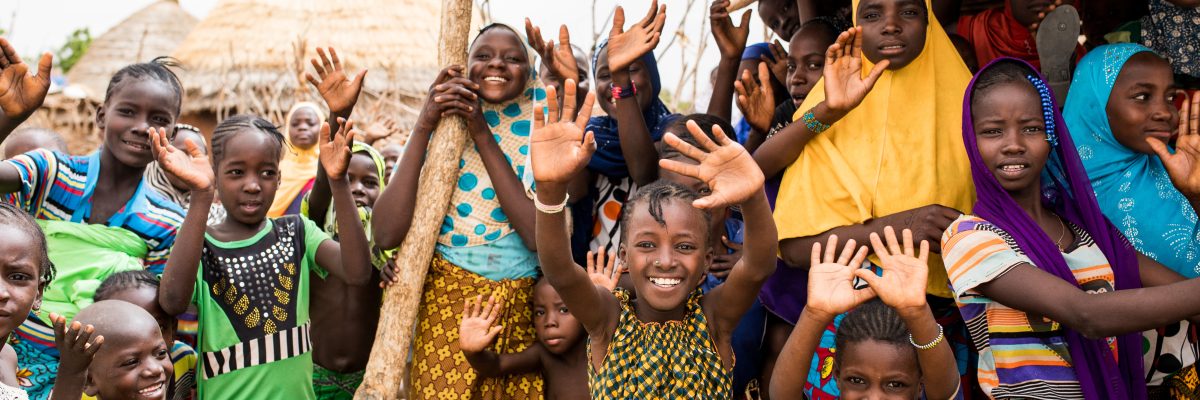
Snapshots from Brussels: Behind Each Activist, There’s a Story
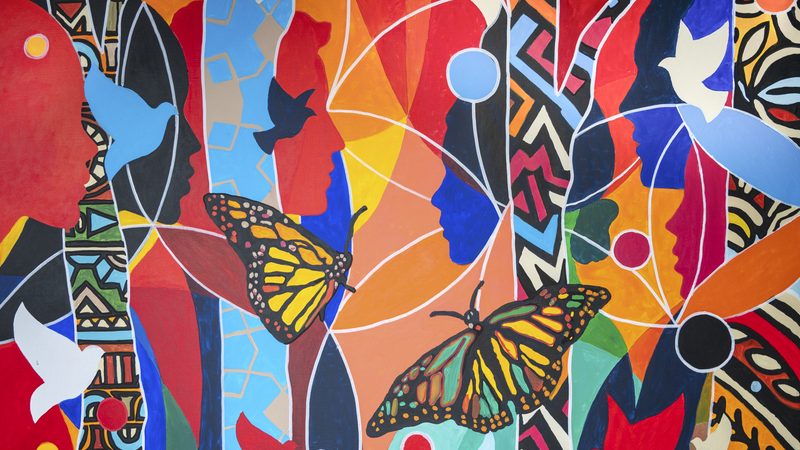
Participants in the Center’s 14th Human Rights Defenders Forum put paint to canvas together, creating a mural that reflects their shared vision of a better and more just world.
Some live and work in exile, fighting for rights in their countries from afar. Others cannot be photographed or named, for fear of what their governments would do to them. Then, there are those who openly battle on the frontlines at home, despite political and legal challenges, lost funding, and even threats.
About 40 activists, working for various causes and communities, met in Brussels, Belgium, for three days in May for the Carter Center’s 14th Human Rights Defenders Forum. They came from Africa, the Middle East, Europe, Asia, Central and South America, and the United States.
The gathering, first held in 2003, provides an opportunity for participants to share strategies, build solidarity, and find inspiration. And while all previous forums were held in Atlanta, difficulties securing visas and fear of travel to the U.S. necessitated a change of venue this year.
Each participant had a story to tell. These are just some of them.
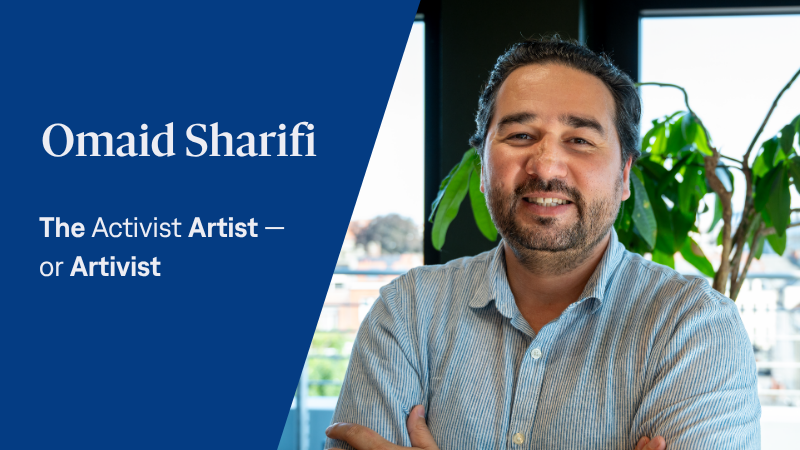
Omaid Sharifi was painting a mural with friends in Kabul the day his beloved Afghanistan fell to the Taliban in August 2021. He felt like one of those musicians in the movie “Titanic,” who kept playing their instruments as the ship went down.
As the co-founder and president of ArtLords, a grassroots movement established in 2014, he and his team of artists and volunteers completed more than 2,200 murals in 24 provinces in Afghanistan. The street art promoted women’s rights to education, called out corruption, pushed for public health initiatives, and more. The Taliban destroyed them all within a month of regaining control, Sharifi said. By then, he had escaped.
Now a refugee living in Virginia, he continues to oversee ArtLords from afar. Its activism has spread to other parts of the world while the organization still strives to defend artistic freedom in Afghanistan, where the efforts continue underground.
They are working with more than 1,000 women artists across the country in hidden studios, where women secretly gather, find community, let out their emotions, and, he said, “keep the flame of resistance alive through art” — which is smuggled out of the country and shared with the world.
Sharifi came to the forum to discuss his vision, encourage others to bring the power of art into their work, and invite participants to collaborate in painting a large canvas to commemorate their time together.
“Partner with us. Partner with each other,” he told the group. “Let’s make art the heartbeat of every movement.”
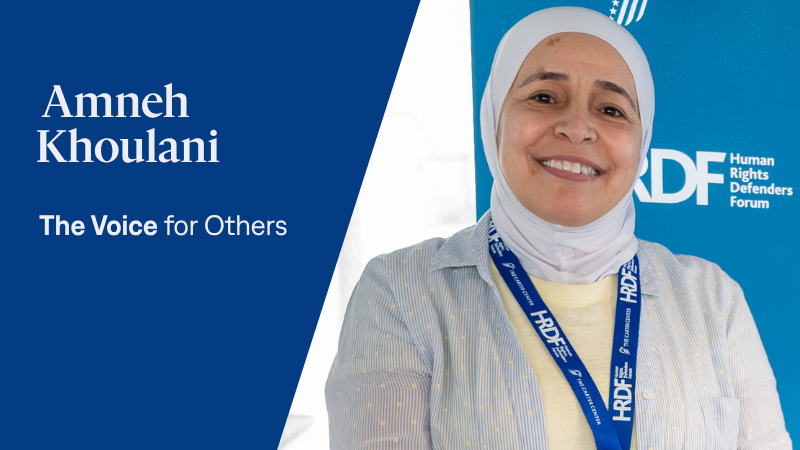
Amneh Khoulani speaks for Syrians who no longer can. This includes her three brothers and countless friends who died in the infamous Saydnaya prison during Bashar al-Assad’s brutal regime. And it includes the women and children she left behind when she was freed from prison after six months.
“I promised them that I will be their voice around the world,” said Khoulani, a tireless activist who’s addressed the U.N. Security Council, received international recognition, and now splits her time between the United Kingdom and Damascus. “I cannot give up.”
She serves as the executive director of the Adalaty Centre for Women’s Voices and is a member of the National Commission for Missing Persons in Syria. The truth is owed to families of the hundreds of thousands of Syrians who’ve disappeared, she explained, and it’s needed before steps can be taken to seek justice or accountability.
In 2020, she was honored with the International Women of Courage Award at the U.S. Department of State.
From her pocket, she pulls a simple bracelet, crafted from thread and olive pits. A 17-year-old prisoner made it before she was tortured to death. Khoulani carries it with her always, to remind her why the work cannot stop.
Since Assad’s overthrow in December 2024, Khoulani clings to what may now be possible.
“It’s different because now we have a home. We have hope. We can rebuild our country,” she said. “We can help people recover.”
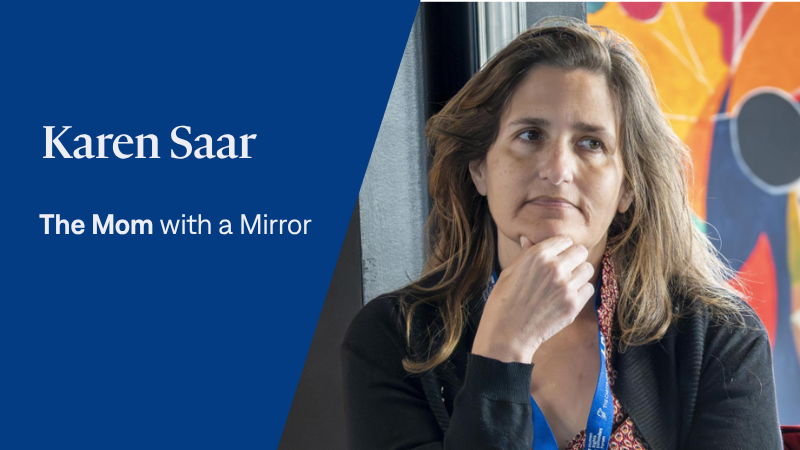
In her free time, Karen Saar protests. Every Saturday night, for the better part of eight years, she’s joined other demonstrators in the streets of Jerusalem and Tel Aviv. She creates a new sign in Hebrew and English every week, has been known to use a megaphone, and demonstrates against executive overreach, government corruption, the Israeli occupation, the war, and more — never mind the hoses that have been turned on her or the horses that threaten to trample her. Even missiles flying in from Lebanon, Gaza, or Iran have not stopped her.
Saar is with The Association for Civil Rights in Israel, the oldest and largest human rights organization in Israel and one that fights a wide spectrum of violations. The group focuses on Israel’s shrinking democratic sphere, the judicial overhaul that would weaken checks and balances, and crackdowns on freedom of speech and protest. It is working to help West Bank farmers facing violence from Israeli settlers, fighting against abuse of Palestinian prisoners, and battling a new death penalty law that only targets Palestinians.
“It’s the right thing to do according to our values. Once you start separating those who ‘deserve’ protection of their rights and those for whom ‘it’s complicated,’ you cannot call yourself a defender of human rights,” she said. “Even if we’re not successful, especially if we’re not successful, we have to look inside ourselves. I have to look in the mirror. I have to look at my children’s faces and say, ‘I may have failed, but I have tried.’”
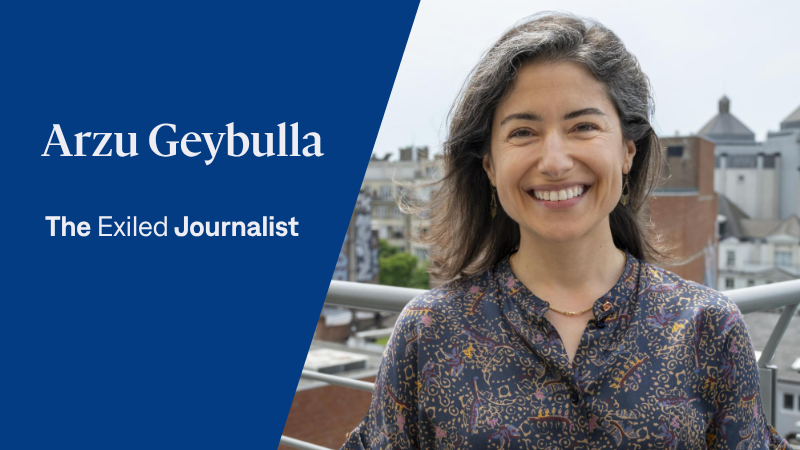
A classically trained violinist, her parents imagined she’d pursue a music career. But Arzu Geybulla had other plans: She would go on to study politics and international relations, an idea hatched in her youth.
She remembers, as a young child in the early ’90s, tagging along with her late father to a reception for the opposition party he represented in the Azerbaijani parliament. Politicians and diplomats swirled around her at a time when her country, newly independent, brimmed with hope and possibility.
Geybulla has worn many professional hats. She focused on gender and women’s rights at a think tank. She’s worked with the National Democratic Institute and done research for Human Rights Watch. As a freelance columnist based in Istanbul, Turkey, she called out her home country for corruption and human rights violations. She founded a platform to monitor digital information controls and is part of an initiative that advocates for political prisoners in Azerbaijan. The list goes on.
Along the way, because of her writing, she’s been subjected to a flood of threats and hate, which keep her living in exile in Turkey. When the Azerbaijani authorities began targeting Azerbaijanis living abroad late last year, she wanted to crawl into a hole and disappear.
Instead, she pivoted.
At the start of this year, she was named the co-executive director of Access Now, which hosts RightsCon, a global summit on human rights in the digital age that draws thousands of participants. In late April, Access Now made the decision to cancel RightsCon 2026, after saying the host country of Zambia caved to foreign interference from China — an experience Geybulla recounted in a presentation at the forum.
Sometimes, she asks herself why she isn’t a yoga teacher. But being around other human rights defenders in Brussels gave her the sort of boost she needed.
“Foreign influence, national oppression, funding problems, elections, politics: It’s all part of our lives,” she said. “And coming here, despite all these challenges, everyone is still committed to working together, finding alternatives, and still talking about impact.”
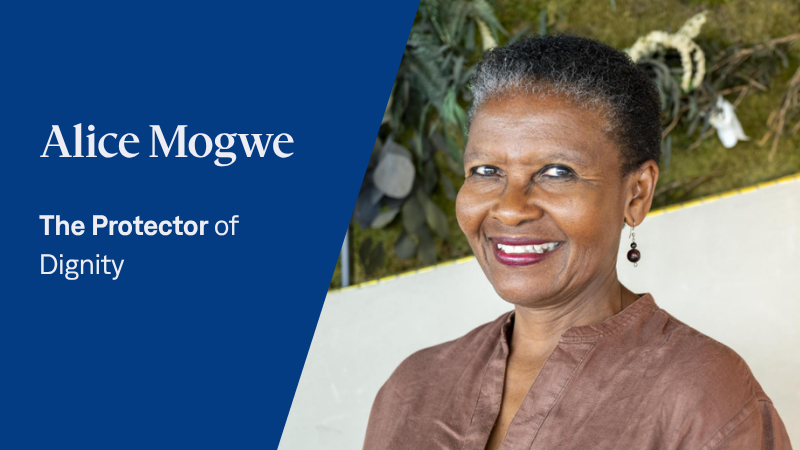
For decades, Alice Mogwe has been dedicated to human rights work. In 1993, she established DITSHWANELO – The Botswana Centre for Human Rights, which she still leads. She was a two-term president of the International Federation for Human Rights and is the current co-chair of Botswana’s National Human Rights Coordination Committee.
She’s fought against the death penalty, supported the LGBTQ+ community, and defended the rights of Indigenous people and domestic workers. She’s helped refugees who fled torture in Zimbabwe under Robert Mugabe’s rule, offered free legal aid and mediation services, and advocated for those living with HIV/AIDS. She believes in working coalitions and empowering other organizations to thrive independently.
Mogwe holds a doctorate in politics and international studies, and a Master of Law, but thinks of herself as “an activist researcher or a research activist, whichever way you’d like.”
She’s guided by the African value of botho, which says her humanity is linked to all other peoples’ humanity and recognizes that every person has a right to be treated with dignity.
“We all — regardless of color, age, religion, geographic location — want to live with dignity,” Mogwe said. “I see rights as mere tools to protect dignity.”
Human rights defenders persist around the world because we know this is the important work that has to be done. The work that you do every day inspires us, and we will continue to try to elevate it.
More Stories
Global Impact Starts with You
Your support sustains the Carter Center's mission of waging peace, fighting disease, and building hope around the world.