Ordinary People, Extraordinary Purpose: How Observe New Mexico Elections Builds Trust
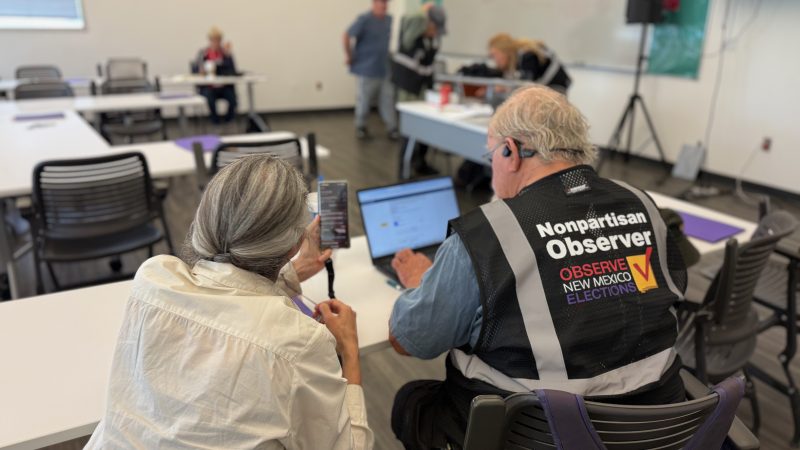
The Carter Center helped facilitate and observe election observation missions in New Mexico in 2024, 2025, and 2026, working with partner Observe New Mexico Elections (ONME). (Photo: Submitted)
Recently retired engineer Lawrence Klebesadel left his job to become what he calls “a democracy defender.” But he didn’t expect election day for New Mexico’s municipal elections would mean packing his lunch, skipping his break, and staying 17 hours — seated four feet from a same-day registration table, watching election officials spend 20 minutes poring over state law to honor the vote of a citizen with an expired driver’s license.
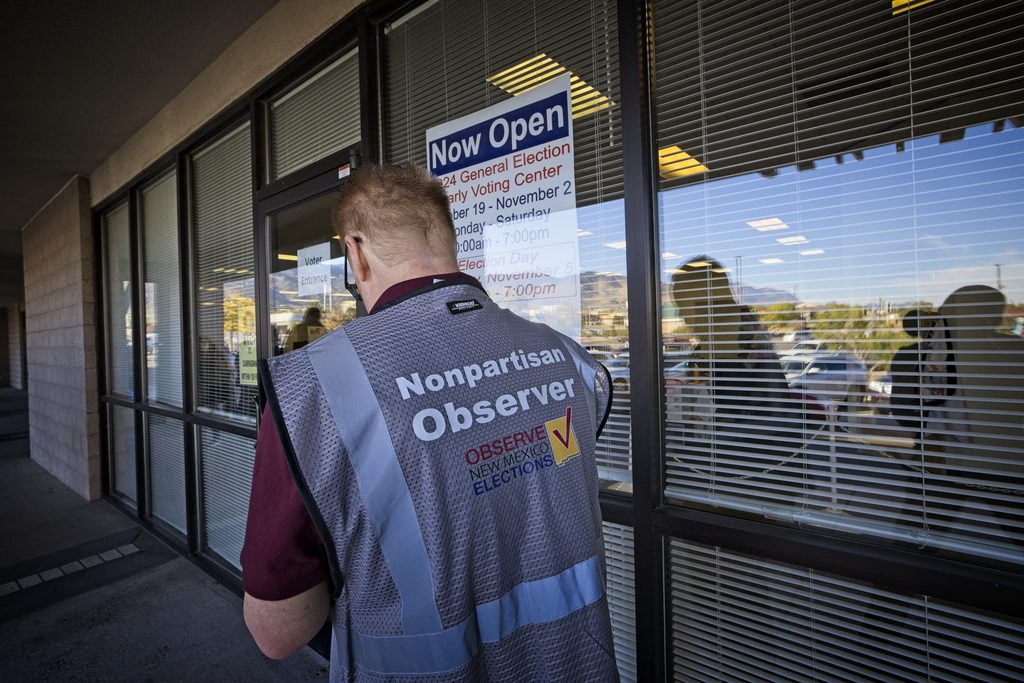
Klebesadel was one of approximately 105 New Mexicans who participated in the 2025 Observe New Mexico Elections project, a nonpartisan effort supported by The Carter Center. They deployed across 11 municipalities during early voting and on election day to independently document what they witnessed at polling places across the state. ONME, as the organization calls itself, trains community members to observe elections as nonpartisan witnesses, equipped with checklists based on official procedures and laws. ONME went on to observe the state’s primary elections in every county in 2026 and is preparing to deploy hundreds of observers during the November 2026 general elections.
“Every single one of those people had a passion for democracy and a passion to ensure that everybody had their privilege, right, entitlement to cast their vote,” Klebesadel said.
What Observers Witnessed
What observers documented in 2025 was largely reassuring. They noted careful ballot custody procedures, electronic poll books, and ballots printed in both English and Spanish. In location after location, they saw poll workers who treated every voter with respect and patience.
One observer saw a blind voter independently complete the accessible voting process after poll workers set up the accessible booth.
What surprised many was the numerous layers of verification surrounding every phase of the process.
“There is something more than just poll worker training and procedures that help the voter experience,” said Charlotte Hetherington, an independent observer with ONME.
The Value Observers Bring Home
What observers found most significant was what they carried back to their communities. In post-election interviews, observers described conversations with friends, family members, and neighbors who were curious, anxious, and eager to hear an honest, firsthand account of what the voting process actually looks like.
Ken Anderson, an observer who had recently moved to New Mexico from Oregon, noted that even lawyers and lobbyists who lived near the state Capitol were surprised to learn that neutral, nonpartisan observation existed.
“I think there is value in making ONME more visible to show the value of neutral observation,” Anderson said.
A Model That Keeps Getting Better
The program was not without challenges. A few observers met presiding judges who were initially guarded — what one observer described as the “hall monitor effect” — though most of those relationships warmed as the day went on.
What distinguished the project was its responsiveness: ONME keeps refining its training, checklists, and procedures. Many of the improvements observers noticed in 2025 came directly from feedback that volunteer observers gave in 2024. Feedback from 2025 has shaped the project’s 2026 planning.
In a moment when trust in democratic institutions is fragile, ONME offers something neither legislation nor litigation can — neighbors who observed the process on behalf of their communities and came home to share what they saw.
Related Resource
More Stories

Global Impact Starts with You
Your support sustains the Carter Center's mission of waging peace, fighting disease, and building hope around the world.