World NTD Day: Together, We’re Ending Neglected Tropical Diseases
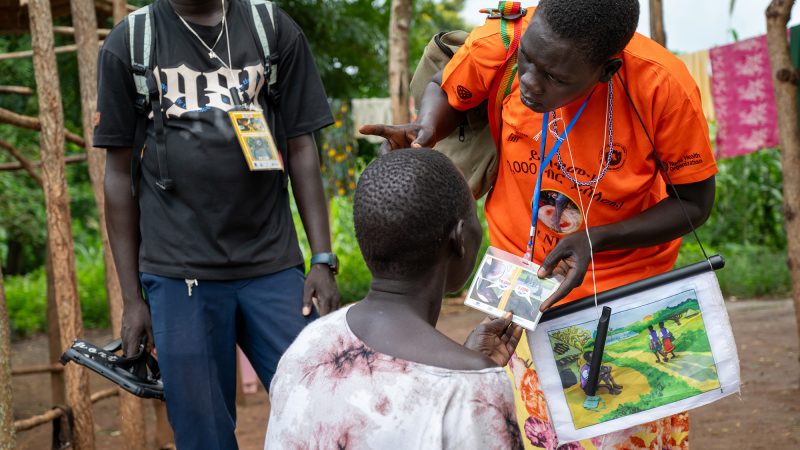
Neglected tropical diseases, or NTDs, are a group of preventable and treatable illnesses that affect the world’s most vulnerable populations. While not always fatal, their effects can be devastating. NTDs cause chronic pain, blindness, and disfigurement, contributing to a cycle of poverty that keeps children out of school and adults out of work.

The human toll is steep — but we are fighting back. Together.

Every January, organizations like The Carter Center observe World NTD Day to raise awareness of the suffering these diseases create for more than 1 billion people worldwide. The day offers an opportunity to reflect on decades of progress in reducing hardships caused by NTDs while fortifying future actions toward eradication and elimination.

Since its founding, The Carter Center has remained committed to battling NTDs. Today we combat five World Health Organization-designated diseases: Guinea worm, river blindness, trachoma, schistosomiasis, and lymphatic filariasis. Working alongside countries and communities, a broad spectrum of partners, and with the support of many donors, we prioritize affordable, community-focused methods for treatment and prevention. This approach has helped millions of people live healthier, more productive lives.

Across Africa, Asia, and Latin America, we have assisted 22 countries in the elimination of at least one disease. With the Center’s support, more than 1 billion doses of generously donated essential medicines have been delivered to communities in need.

One achievement, however, highlights what’s possible when we work together to tackle daunting challenges.

In 1986, The Carter Center made the bold decision to lead an international campaign to eliminate Guinea worm disease. Since then, annual cases have declined from an estimated 3.5 million to just a handful worldwide. For the first time, a world free of Guinea worm disease is within reach.

But the work is far from over — and we have no intention of stopping now.

Together, we’ll confront neglected tropical diseases. Together, we’ll end them.

To learn more about our work on NTDs and the people whose lives have been transformed, explore the stories below:
Read More
Read More
Read More
Read More
Read More

Partnerships and Funding Support

The Carter Center is grateful for many donors who support our mission to end NTD’s together. Generous in-kind donations from many corporate partners sustain our work, including Pfizer, Inc., Merck & Co., Inc., GSK, Merck KGaA, BASF Agriculture Solutions and Lifestraw®, among many others. Financial support for our work has been provided by the Gates Foundation, the Mohamed Bin Zayed Foundation for Humanity, the Lions Clubs International Foundation, The Conrad N. Hilton Foundation, the United Kingdom’s Foreign, Commonwealth & Development Office, and many other donors.

Many generous foundations, corporations, governments, and individuals have made the work to eradicate Guinea worm disease possible, including funding support from the Gates Foundation; the United Kingdom’s Foreign, Commonwealth & Development Office; the government of Japan; Schreiber Philanthropy; and Alwaleed Philanthropies. Funding support from the United Arab Emirates began with His Highness Sheikh Zayed bin Sultan Al Nahyan, founder of the UAE, continued under His Highness the late Sheikh Khalifa bin Zayed Al Nahyan, and has grown under His Highness Sheikh Mohamed bin Zayed Al Nahyan, president of the UAE, through the Mohamed Bin Zayed Foundation for Humanity. BASF Agricultural Solutions donated ABATE® larvicide (temephos) since 1990, and LifeStraw® donated personal pipe filters and household cloth filters since 1999. The DuPont Corporation and Precision Fabrics Group donated nylon filter cloth early in the campaign.